
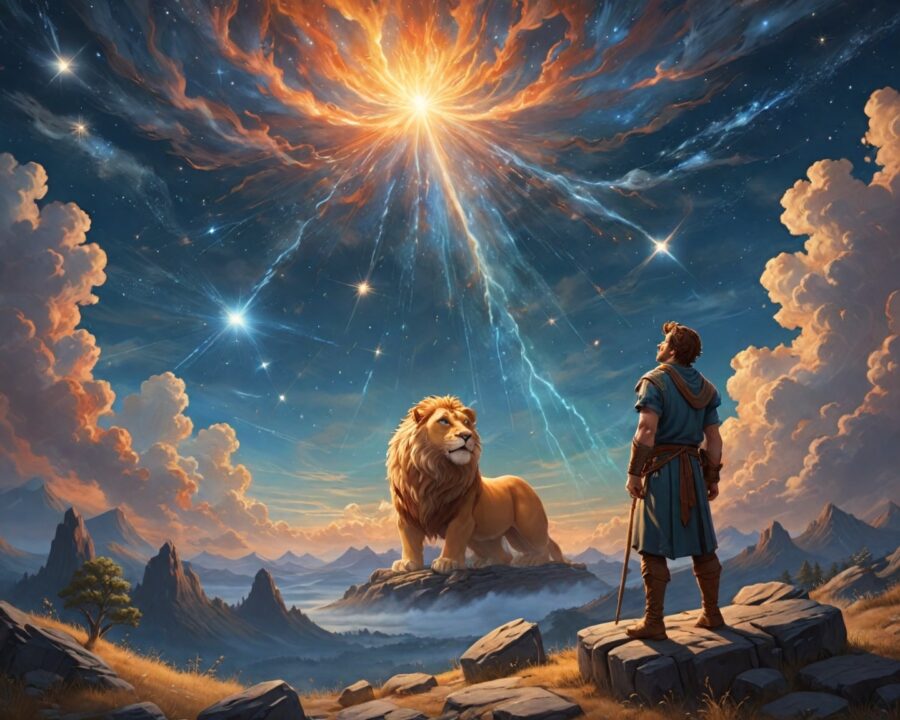
Introduction to Mythology and Its Connection to Astrology
Mythology and astrology have intertwined throughout human history, each shaping the other in various intricate and symbolic ways. Mythology, with its rich tapestry of stories and characters, provides the backdrop against which civilizations have interpreted the heavens. As ancient people gazed up at the night sky, they saw more than stars; they imagined gods, heroes, and mythical creatures that reflected their beliefs and values. These celestial narratives offered explanations for natural phenomena and guided societal norms, creating a foundational link between mythology and astrology.
Astrology, in turn, has used these mythological themes to give meaning and context to the placement of stars and planets. Astrological practices often draw heavily on myths to explain the influence of celestial bodies on human affairs. By naming constellations after mythological figures and events, early astronomers created a cosmic map that guided navigation, marked agricultural cycles, and provided omens. This connection demonstrates how mythology has been integral in shaping our understanding of astrology, making it not just a science but also an art infused with symbolic meaning.
The Role of Mythology in Naming Constellations
The names of constellations we are familiar with today are steeped in mythological stories passed down through generations. The ancient Greeks, who were keen observers of the night sky, used mythology extensively in their identification and naming of constellations. By embedding these mythological references in the stars, they preserved cultural narratives and presented astronomical patterns in a relatable context.
One notable example is the constellation Orion, named after a hunter in Greek mythology. According to legend, Orion boasted he would kill every creature on Earth. In response, the goddess Gaia sent a scorpion to kill him, which is commemorated in the sky as the constellation Scorpius. This myth provides a vivid allegory for natural balance and retribution, demonstrating the moral messages often encoded within these celestial stories.
Another well-known constellation is Andromeda, named after a princess in Greek mythology who was chained to a rock as a sacrifice to a sea monster. Her story intertwines with those of other constellations, such as Perseus and Cetus, reflecting how these myths often comprise broader cosmic narratives. Among the stars, Andromeda’s tale serves as a reminder of the ancient values of heroism, sacrifice, and deliverance.
Famous Mythological Stories Behind Popular Constellations
Several constellations derive their names from captivating mythological tales that have intrigued generations across cultures. These stories often feature gods, heroes, and mythical creatures, each providing insight into the societal values and beliefs of the time.
The tale behind the constellation Hercules is a prime example. Hercules, known for his incredible strength and heroic endeavors, is a character from Greek mythology who completed twelve perilous labors. Among these, slaying the Nemean Lion and capturing the Erymanthian Boar are visually immortalized in the sky, illustrating strength, courage, and perseverance in myth.
Another famous story is that of the Gemini twins, Castor and Pollux. Sons of the king of Sparta in Greek mythology, these twins are seen as paragons of brotherhood and loyalty. When Castor was killed, Pollux, who was immortal, begged Zeus to allow him to share his immortality with his brother. Zeus agreed, and both were placed in the stars as the constellation Gemini, symbolizing eternal brotherhood.
The constellation Pisces is based on the tale of Aphrodite and Eros, who transformed into fish to escape the monster Typhon. They tied themselves together with a rope to avoid losing one another in the river, showcasing themes of connectivity, unity, and love. These stories, while seemingly fantastical, reflect the archetypal themes found in human relationships, aspirations, and fears.
How Ancient Cultures Interpreted the Stars Through Myths
Ancient cultures around the world used myths to interpret the stars, crafting narratives from their observations that often explained various aspects of life and the cosmos. These myths were deeply embedded in religious and cultural contexts, giving the stars meanings that went beyond their scientific or navigational uses.
In ancient Egypt, for example, the star Sirius was associated with the goddess Isis and heralded the annual flooding of the Nile, a critical event for agriculture. The rising of Sirius therefore had immense social and religious significance, linking the star directly to the sustenance and survival of Egyptian civilization.
In Norse mythology, the sky was seen as the domain of gods and supernatural forces. The constellation known as Ursa Major was perceived as a formation of warriors, aligning with the characteristically war-focused Norse mythos. Similarly, the Milky Way was interpreted as the “road to Valhalla,” the hall where fallen warriors would go after death.
Indigenous peoples in North and South America also had rich traditions of stargazing and myth-making. For instance, Native American tribes such as the Lakota used the Big Dipper (part of Ursa Major) in their storytelling, associating it with the Great Bear, a powerful figure in their cosmology. This reflects the universality and diversity of interpreting the heavens through mythical frameworks.
The Influence of Greek and Roman Mythology on Astrology
Greek and Roman mythology have played a profound role in shaping astrology as we know it. Many astrological signs and symbols are drawn directly from the myths of these two cultures, reflecting a blending of astronomical observation with storytelling traditions.
The twelve signs of the zodiac, for example, are largely rooted in Greek mythology. Aries is linked to the ram with the golden fleece from the myth of Jason and the Argonauts, while Leo represents the Nemean Lion, one of Hercules’ legendary foes. These narratives brought the astrological signs to life, providing meaningful interpretations for celestial patterns observed across the seasons.
Similarly, planets were named after Roman gods, each believed to influence human behavior based on the attributes associated with these deities. Mars, named after the god of war, is associated with aggression and action, while Venus, named after the goddess of love, symbolizes beauty and attraction. This naming convention underscores how mythology not only informed the stars’ names but also their perceived influence in astrology.
Incorporating these mythical elements into astrology helped create a more comprehensive understanding of how celestial bodies may impact earthly events. These associations continue to influence modern astrological practices, blending ancient myths with contemporary interpretations.
Comparing Mythological Influences Across Different Cultures
Mythology and astrology are not the sole domain of Greco-Roman cultures. Diverse civilizations have contributed their own stories, with each narrative adding to the richness of our global cosmic understanding. This cross-cultural perspective offers a fascinating glimpse into how different societies have utilized mythology to interpret the stars.
In Chinese mythology, for example, the heavens are divided into four quadrants, each represented by a mythical creature: the Azure Dragon of the East, the White Tiger of the West, the Black Tortoise of the North, and the Vermilion Bird of the South. This system, central to Chinese constellations and astrology, reflects the society’s unique cosmological view and philosophical principles.
Indian mythology also offers a wealth of astral myths, particularly through the Vedic tradition, which contributed significantly to Hindu astrology (Jyotisha). For instance, the constellation of Capricornus is tied to the legend of the deity Varuna and is associated with spiritual and worldly order.
The Mayan civilization had a sophisticated understanding of the cosmos, as evidenced by their complex calendar systems. They linked celestial movements to their mythology, with celestial bodies like Venus playing significant roles in their myths and rituals. Such stories offered insights into Mayan values and their comprehension of time.
| Culture | Mythological Influence on Astrology |
|---|---|
| Greek/Roman | Zodiac signs based on gods and heroes |
| Egyptian | Sirius as the indicator of the Nile’s flooding |
| Chinese | Four mythological creatures representing cardinal directions |
| Indian | Vedic traditions integrating spiritual order with constellations |
| Mayan | Venus and other celestial bodies in their calendars |
Common Questions About Mythology and Constellations Answered
What is the connection between mythology and astrology?
Mythology and astrology are interconnected because myths often provide the naming conventions and narrative context for constellations and celestial bodies, which astrology uses to explain cosmic influence on human affairs.
Who named the constellations after mythological figures?
Many constellations were named by the ancient Greeks, who drew upon their rich mythology to attach stories to the star patterns they observed.
Why do different cultures have different constellations?
Different cultures have unique myths and cosmologies, leading them to identify and name celestial patterns in ways that reflect their specific beliefs and societal values.
How does mythology influence modern astrology?
Modern astrology is heavily influenced by mythological symbolism, with zodiac signs and planetary associations often rooted in ancient myths that provide deeper meaning to astrological interpretations.
Are all constellations based on Greek mythology?
While many known constellations are named after Greek myths, various cultures worldwide have their own interpretations and mythologies associated with the stars.
How can mythology help in understanding constellations?
Mythology offers narrative frameworks that make constellations more memorable and meaningful, linking the stars to human experiences, values, and moral lessons.
What role did ancient myths play in celestial navigation?
Ancient myths embedded in constellations helped people remember star patterns, valuable in navigation and timing agricultural activities, by providing mnemonic devices through storytelling.
The Practical Impact of Mythology on Modern Astrology
In modern times, mythology continues to shape astrology by offering a narrative foundation upon which astrological practices are built. The symbolic language of myths provides a rich reservoir of themes and archetypes, helping astrologers interpret the influence of celestial bodies in a relatable way.
Astrologers today often reference mythological stories when explaining the characteristics associated with zodiac signs or planetary transits. For example, the story of Venus as the goddess of love still informs our understanding of how Venus influences interpersonal relationships, attraction, and beauty in astrological charts.
Moreover, mythology has influenced the language and metaphors used in astrology. Terms like “Mercury retrograde,” for example, evoke images of the trickster god Mercury, known in Roman mythology as a messenger and harbinger of change. These mythological references make astrological concepts more accessible and engaging to those learning about them.
The continued reliance on mythology highlights its enduring power to help individuals make sense of their experiences. It suggests that myths not only offer insight into past cultures but continue to provide a scaffold upon which individuals understand cosmic forces and navigate life’s complexities.
How to Explore Constellations and Their Mythological Stories
Exploring constellations and their associated mythological stories can be both an educational and enriching experience. This journey helps connect the present with the past while offering insights into both the science of astronomy and the art of storytelling.
Start by selecting a few constellations to focus on, perhaps those visible in your current night sky. Resources like star charts, apps, or websites can help you identify these constellations in your location and season. Once you’ve identified a constellation, delve into its mythology. Books, online databases, or astronomy guides with mythological sections are excellent resources.
Observe the constellation over multiple nights to understand its movement and how it fits into broader celestial patterns. Consider the stories’ broader cultural contexts and what they reveal about the societies that told them. This approach not only enriches your understanding of the night sky but also offers a window into human creativity and worldview.
Engaging with others who share an interest in mythology and astronomy can enhance this exploration. Join local astronomy clubs or online forums where enthusiasts share knowledge and observations, deepening both your understanding and appreciation of this ancient form of storytelling.
Conclusion: The Enduring Legacy of Mythology in Astrology
The enduring relationship between mythology and astrology highlights the human desire to seek meaning from the vastness of the cosmos. By embedding moral lessons, cultural knowledge, and societal values within the stars and their movements, ancient peoples created frameworks that informed their decisions and understanding of the world.
Modern astrology continues to draw from these rich mythological traditions, using them to interpret celestial influences in a manner that is meaningful both personally and culturally. Myths provide a symbolic language that transcends time, allowing individuals to connect with universal themes of love, loss, bravery, and transformation.
As we continue to explore the stars and unravel their stories, the legacy of mythology in astrology remains an inspiring testament to the human spirit’s creativity and curiosity. By gazing at the heavens, we not only see distant worlds but also engage with the narratives and symbolism that have connected humanity for millennia. Through this exploration, we acknowledge the past, understand the present, and contemplate the future, discovering anew how mythology and astrology shape our existential journey.