
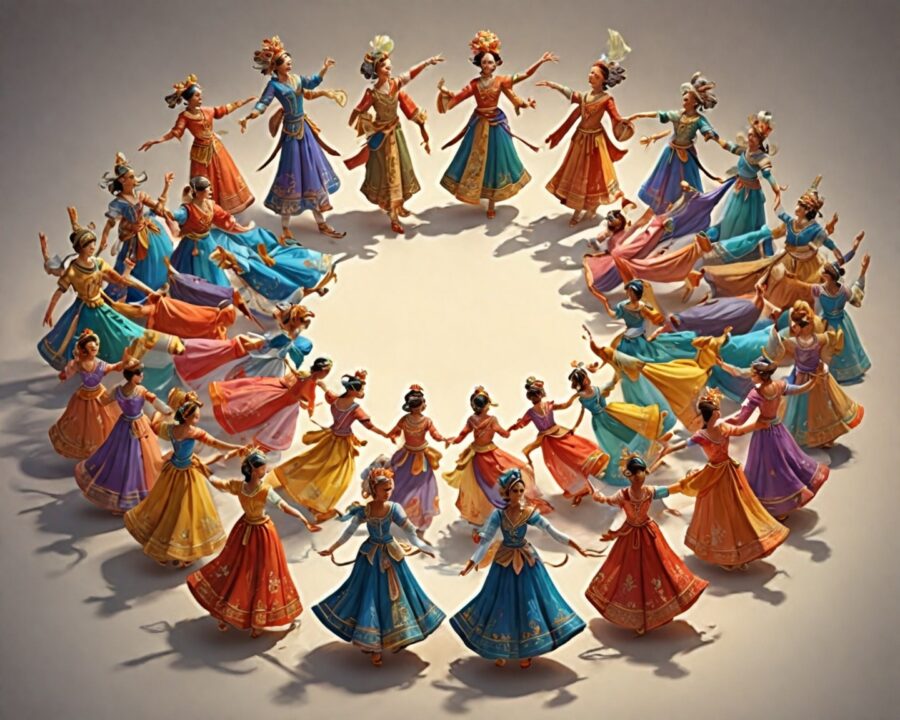
Exploring Traditional Dances from Every Continent
Across the globe, traditional dances tell the stories of our ancestors, carrying cultural significance and historical narratives. From vibrant displays of intricate footwork in Africa to the meditative movements of Asia, traditional dances are as diverse as the continents from which they hail. These dances offer some of the most vivid stories of human history and reflect the unique tempo of life experienced by various cultures around the world. They are not merely forms of entertainment but are core to the identities of communities, providing a tangible link to the past.
Dancing creates a universal language, transcending linguistic barriers and uniting people through shared experience. Each continent boasts a variety of traditional dances that are deeply embedded in its cultural fabric. This exploration involves delving into the cultural significance of these dances, understanding their origins, and appreciating the way they continue to influence contemporary society. Emphasizing the importance of preserving these traditions, this journey through the world’s dances will illustrate how they retain their relevance in modern times and continue to tell their unique stories.
Traditional Dances from Africa: History and Meaning
Africa, a continent bursting with diversity, is home to a variety of traditional dances that embody its rich tapestry of cultures and histories. Each tribe and community showcases distinct styles representing their heritage, spirituality, and societal values. These dances often serve crucial roles in rituals and ceremonies, marking significant life events and festivals.
African dance is characterized by its energy and rhythm, which are often linked closely with the intricate beats of traditional African drums. One of the most famous forms is the Gwara Gwara from South Africa, which gained international fame following its inclusion in global music hits. Originating from the Zulu people, it involves swift foot movements and vibrant gestures, symbolizing resilience and community strength. Similarly, the Adumu or “jumping dance” by the Maasai in Kenya plays a crucial role in tribal ceremonies like the coming-of-age rituals for young men, representing strength and vitality.
Another vital component of African traditional dance is its function within storytelling and oral history. For instance, the Djembe dance is another popular style that merges drumming and movement, serving as an artistic expression of stories passed down through generations. Through these performances, communities keep their histories alive, educate the younger generations, and preserve their unique cultural identity.
Iconic Dances of Asia and Their Cultural Roots
Asia, the largest continent, hosts an array of traditional dances that mirror its social and cultural landscape, influenced by philosophical and spiritual elements. Asian dances often emphasize grace and fluidity, forming an artistic dialogue with their musical counterparts and rich backdrop of traditional costumes.
In India, Kathak is not merely a dance form but a narrative performance art with a history stretching back to ancient temples and royal courts. It combines intricate footwork punctuated by bell-adorned ankle movements and storytelling through facial expressions and hand gestures. The dance serves as a narration of mythological tales and local lore, emphasizing moral tales and spiritual messages.
Moving northeast to Japan, Kabuki encapsulates a unique blend of drama and dance, dating back to the Edo period. Distinct for its elaborate costumes and dynamic poses, Kabuki performances are powerful in their storytelling, showcasing themes of honor, revenge, and romance. Unlike other traditional dances, Kabuki utilizes an all-male cast even for female roles, challenging traditional gender roles within its theatrical milieu.
Across Southeast Asia, the graceful Bali Dance showcases a confluence of Hindu and Buddhist influences. Known for its detailed eye and hand movements, this dance is a tribute to local deities and spirits, presented during religious and community events. Each performance is a spiritual showcase of history, blending the past and present in a seamless cultural mosaic.
European Folk Dances and Their Historical Context
Europe’s folk dances are a window into its past, reflecting centuries of social change, tradition, and celebration. Each European nation offers a wealth of traditional dances that reveal the character and history of its people. These dances range from communal celebrations to solemn, ceremonial rituals.
In Spain, the fiery Flamenco embodies Andalusian, Romani, and Moorish influences, showcasing passionate rhythms and intricate footwork. Flamenco is an expressive art form, integrating singing, guitar playing, and dance, where performers convey a spectrum of emotions from joy to sorrow. Its roots in the marginalized communities of Southern Spain underscore its historical importance as a cultural symbol.
Ireland’s contribution to dance, the Irish Step Dance, has gained global renown, particularly with the rise of dance companies like Riverdance. Known for its fast-paced leg movements while maintaining a rigid upper body, this traditional dance is performed at social gatherings and is a symbol of Irish pride and resilience.
The Polka, originating in Bohemia, exemplifies the communal nature of European folk dances. This spirited dance became popular across Europe in the 19th century, characterized by its lively tempo, upbeat music, and harmonious sense of unity. Whether at festive gatherings or international dance competitions, the Polka continues to be a cherished cultural hallmark.
Traditional Dances of the Americas: Indigenous and Modern Influences
The Americas present a vibrant tapestry of dances that reflect an amalgamation of indigenous traditions, colonial influences, and modern interpretations. From the ceremonial dances of the Native Americans to the rhythmic expressions of Latin America, each dance style tells a story of resilience, resistance, and adaptation.
Powwow dances in North America are a vital expression of Native American culture, serving as a unifying celebration of tribal heritage and identity. These highly symbolic dances showcase community solidarity and spiritual beliefs, surrounded by the beats of traditional drums. Each dance tells a story or conveys a particular message, contributing to the cultural survival of indigenous peoples.
In Latin America, the Samba of Brazil represents the joyous spirit of its people, rooted in African slave traditions and European musical influences. This dance is synonymous with the vibrant Carnival celebrations, featuring energetic music, extravagant costumes, and exuberant movement that captivates both participants and spectators alike.
The Tango, emerging from the neighborhoods of Buenos Aires, Argentina, epitomizes the blend of European, African, and indigenous cultures. Characterized by its passionate and intimate choreography, the Tango captures the emotional depth and complexity of human relationships, becoming a symbol of Argentine culture worldwide.
Unique Dance Styles from Oceania and Their Traditions
Oceania’s dance traditions are deeply intertwined with the spiritual and cultural lives of its indigenous peoples. Across this vast region, dance remains an important medium for storytelling, community bonding, and preserving spiritual beliefs.
In New Zealand, the Haka is a powerful Maori dance that has gained international recognition. Originally a war dance used to intimidate opponents, the modern Haka has evolved into a display of unity and identity, famously performed by New Zealand’s national rugby team, the All Blacks. Despite its martial origins, the Haka is performed at various occasions, including funerals and weddings, symbolizing a profound respect for the cultural roots and ancestral heritage.
The Siva dance from Samoa illustrates the elegance and grace of Oceania’s traditional dances. Siva is performed at cultural feasts and ceremonies, where dancers use gentle hand gestures and fluid movements to convey stories, celebrate life events, and honor deities. This dance emphasizes community participation, often involving an entire village in a single performance.
In the Hawaiian archipelago, the Hula dance preserves the island’s rich history and mythology. Incorporating chants (mele) and music, Hula dancers tell stories of creation, gods and goddesses, and legends passed through generations. This dance serves as a cultural bridge, connecting the Hawaiian people with their ancestry and solidifying cultural continuity.
How Traditional Dances Preserve Cultural Heritage
Traditional dances play a crucial role in preserving cultural heritage, acting as a living archive of a community’s history and values. They provide a sense of continuity, promoting cultural identity and unity among community members. As a means of passing down traditions, these dances offer an opportunity to educate younger generations about their heritage.
| 3 columns, showcasing how different elements are preserved through dance | Element | Description | Examples |
|---|---|---|---|
| Stories and Myths | Dance narratives often include legends, local myths, and historical events. | Kabuki in Japan, Hula in Hawaii | |
| Language and Costumes | Lyrics, chants, and traditional attire are integral to dance, preserving linguistic and cultural authenticity. | Flamenco in Spain, Powwow in the USA | |
| Spiritual Beliefs | Ritual dances incorporate spiritual beliefs and religious traditions, reinforcing community values. | Maasai Adumu in Kenya, Balinese Dance |
In addition to preserving tangible elements, traditional dances also foster a sense of belonging. They allow individuals who might be separated from their homeland or heritage to maintain a connection to their community. During festivals and special occasions, these dances reinforce cultural pride and reinstate a sense of continuity across generations.
Moreover, as globalization influences cultural assimilation, traditional dances stand as a bastion against cultural homogenization. They encourage the recognition and respect of cultural diversity, inspiring inter-cultural dialogue and understanding.
Common Questions about Traditional Dances and Their Evolution
What role does traditional dance play in modern society?
Traditional dances continue to hold significant cultural value in modern society by preserving historical narratives, educating younger generations, and promoting identity and unity. They offer a means of cultural expression and provide a window into the past, helping communities to navigate contemporary challenges with a foundation of shared heritage and values.
How have traditional dances evolved over time?
Traditional dances have evolved over time, adapting to changing social, political, and technological landscapes. While preserving core elements, new influences, such as contemporary music styles and global intercultural exchanges, have enabled these dances to remain relevant and dynamic while retaining their traditional essence.
Can traditional dances be commercialized while preserving their integrity?
There is a delicate balance between commercialization and preservation. While some commercialization can help spread awareness and appreciation for traditional dances, it is essential to respect the cultural context and maintain the integrity of the performance. Successful examples include international dance festivals and cultural exchange programs that promote authenticity.
Why are costumes important in traditional dances?
Costumes play a crucial role in traditional dances, reflecting historical and cultural aspects of a community. They enhance the visual appeal and artistic expression, often symbolizing elements of mythology, spiritual beliefs, and societal hierarchies integral to the dance’s narrative.
How can one participate or witness traditional dances authentically?
To experience traditional dances authentically, consider attending cultural festivals, visiting countries during significant celebrations, and engaging with local communities. Tour operators and cultural organizations often provide opportunities for visitors to observe or participate in traditional dance workshops and performances, offering authentic and respectful experiences.
The Role of Music and Costumes in Traditional Dances
The role of music in traditional dances cannot be overstated as it provides the rhythm, mood, and ambiance essential for storytelling. Musical instruments and vocal accompaniments are integral, enhancing the narrative and emotional tone of the dance. In African and Latin dances, percussion instruments like drums and maracas set the pace, while flutes and string instruments are prevalent in Asian and European dances.
Similarly, costumes serve as an extension of the dance narrative, reflecting the cultural identity and historical context of the performance. Traditional attire in dance can reveal much about a community’s values, spirituality, and social structure. For instance, the elaborate costumes in Japanese Kabuki or the vibrant attires in Brazilian Samba are not only eye-catching but also deeply symbolic.
List of key elements where music and costumes are crucial:
- Setting the Mood: Music dictates the atmosphere, whether somber or celebratory, influencing the dancers’ movements and audience’s perception.
- Narrative Enhancement: Costumes act as visual storytellers, displaying color, design, and symbolism to convey historical and cultural themes.
- Cultural Expression: Both music and costumes showcase cultural uniqueness, often handmade and incorporating traditional symbols and materials.
Costumes and music together create a comprehensive experience, transporting audiences through time and geography, and revealing cultural nuances that might otherwise be lost without contextual appreciation.
How to Experience Traditional Dances During Your Travels
Experiencing traditional dances firsthand is an extraordinary way to immerse oneself in a new culture. One can start by researching local festivals and national holidays where dance plays a significant role. This approach ensures an authentic glimpse into the cultural fabric of a region.
Engaging with local communities provides another opportunity for cultural immersion. Participating in workshops or classes led by native dancers offers insights into the significance and techniques of the traditional dance forms. This personal interaction enhances understanding and appreciation and often includes learning about the history and techniques of the dances.
Here are some tips for experiencing traditional dances authentically while traveling:
- Attend Cultural Festivals: Many countries host dance festivals which celebrate and showcase local traditional dances. Research the timing and locations of these events to plan your visit.
- Local Community Engagement: Reach out to cultural centers or community groups that might offer dance demonstrations or workshops.
- Be Respectful and Open-minded: Approach these experiences with respect for the culture and traditions, recognizing their importance to the local communities.
By engaging directly with traditional dances through travel, individuals gain not only entertainment but a deeper understanding of cultural heritage and human expression.
Recap of the Main Points
- Cultural Importance: Traditional dances across continents embody the cultural and historical essence of societies, preserving narratives and traditions.
- Diversity of Forms: Each continent offers unique dance forms that reflect their respective cultural influences, from Africa’s energetic rhythms to Oceania’s spiritual storytelling.
- Heritage Preservation: Traditional dances play a vital role in safeguarding cultural heritage, acting as a bridge between past and present.
- Music and Costumes: These elements are essential, contributing to the narrative and emotional depth of traditional dances.
- Authentic Experiences: Experiencing these dances through travel fosters cultural understanding and appreciation.
Conclusion
Traditional dances offer a captivating journey through the essence of human culture and history, each movement steeped in the past and enriched by the generations that continue the tradition. From Africa’s vibrant energy to Asia’s graceful expressions, every continent contributes to the world’s cultural dance narrative, offering lessons in history, connection, and community.
As globalization continues to influence the alignment of cultural practices, traditional dances persist as vital threads weaving the diverse tapestry of human heritage. Preserving these art forms is paramount, not only for cultural pride and identity but also for fostering mutual respect and understanding among the world’s varied peoples. Through appreciation and engagement, traditional dances will undoubtedly continue to enliven and educate generations yet to come.