
Mythological Weapons: Exploring Famous Swords Through Time
Throughout history, mythological weapons have captivated the imagination of people across cultures. Among these, famous swords stand out as symbols of power, honor, and destiny. The stories surrounding these legendary blades often intertwine with the myths of heroes and gods, echoing through the ages. In this article, we will delve into some of the most legendary swords, examining their origins, significance, and the impact they continue to have in modern culture.
From the Sword of Excalibur associated with King Arthur to the mystique of the Kusanagi-no-Tsurugi from Japanese lore, these weapons are more than mere tools of war; they embody the ideals and aspirations of the societies that revered them. We will explore their stories, the characters associated with them, and how they have influenced literature, film, and popular culture.
In addition to their historical context, we will also discuss the cultural significance of mythological weapons in today’s world. How do these ancient tales resonate with modern audiences? What lessons can we draw from the legends surrounding these blades? Join us on this fascinating journey as we uncover the enduring legacy of famous swords and their impact across time and space.
By the end of this exploration, you will have a deeper understanding of the intricate connections between myth, culture, and the art of storytelling, all through the lens of these iconic swords.
The Sword of Excalibur: Legend of King Arthur
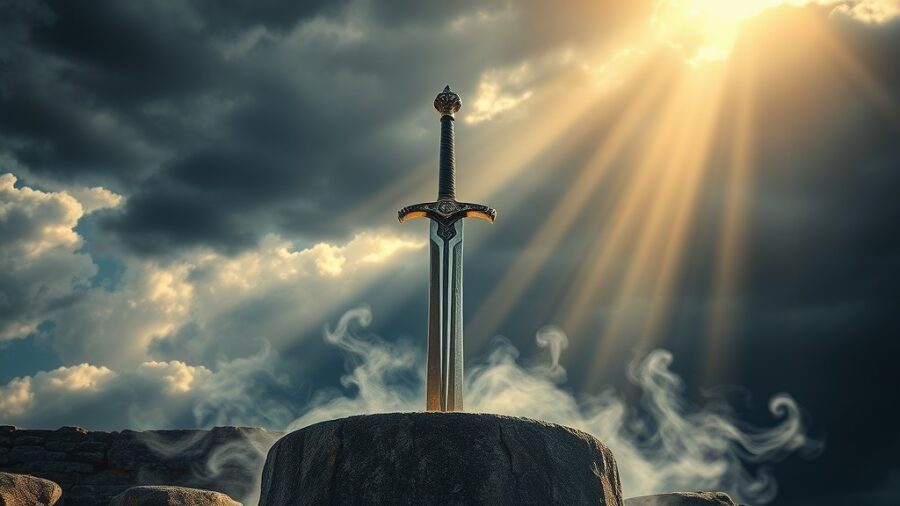
The Sword of Excalibur is perhaps one of the most famous mythological weapons in Western literature. Associated with the legendary King Arthur, Excalibur is often depicted as a symbol of sovereignty and divine right. The origins of this sword are steeped in mystery, with various accounts of how Arthur came to possess it. Some tales suggest that it was given to him by the Lady of the Lake, while others claim that it was drawn from a stone, proving Arthur’s rightful claim to the throne.
Excalibur’s significance extends beyond its physical form; it represents the ideals of chivalry, bravery, and the quest for justice. The sword is often imbued with magical properties, providing Arthur with unmatched strength in battle. Its legendary status has been a source of fascination for centuries, inspiring countless adaptations in literature, film, and art.
Excalibur in Literature and Film
Throughout the centuries, Excalibur has appeared in numerous literary works, from Thomas Malory’s “Le Morte d’Arthur” in the 15th century to modern interpretations in films such as “Excalibur” (1981) and “King Arthur: Legend of the Sword” (2017). Each of these adaptations brings a unique perspective to the legend, exploring themes of heroism, betrayal, and the quest for identity.
The Symbolic Meaning of Excalibur
Excalibur serves not only as a weapon but also as a profound symbol of leadership. In many interpretations, the sword’s ability to grant power is closely tied to the character of the wielder. The notion that only a true king can wield Excalibur speaks to the broader themes of legitimacy and moral responsibility. This connection between power and virtue remains relevant in contemporary discussions about leadership and governance.
The Kusanagi-no-Tsurugi: The Japanese Grass-Cutting Sword
The Kusanagi-no-Tsurugi is a revered sword in Japanese mythology, often translated as the “Grass-Cutting Sword.” It is one of the three Imperial Regalia of Japan, symbolizing the nation’s legitimacy and divine authority. According to legend, the sword was discovered by the hero Yamato Takeru while he was on a quest to defeat a monstrous serpent. The sword is said to possess the power to control the winds and is associated with various deities in Shinto mythology.
This sword’s significance extends beyond its mythological origins, playing a vital role in Japan’s cultural history. The Kusanagi-no-Tsurugi has been featured in various artistic representations, including traditional paintings and modern anime, illustrating its enduring legacy in Japanese culture.
The Historical Context of Kusanagi-no-Tsurugi
Historically, the Kusanagi-no-Tsurugi has been linked to the Imperial family of Japan. It is believed to have been passed down through generations, representing the divine right of the Emperor. This connection to the ruling class further emphasizes the sword’s importance as a symbol of national identity and cultural heritage.
Modern Interpretations of Kusanagi-no-Tsurugi
The Kusanagi-no-Tsurugi continues to inspire contemporary works in literature, manga, and film, reflecting its lasting impact on popular culture. It represents the fusion of myth and reality, illustrating the way ancient stories can shape modern narratives. Various adaptations explore themes of bravery, sacrifice, and the eternal struggle between good and evil, resonating with audiences around the world.
The Durendal: The Sword of Roland in French Epic
The Durendal is a legendary sword associated with the epic hero Roland, a central figure in the “Song of Roland,” one of the oldest surviving major works of French literature, dating back to the 11th century. Durendal is described as an exceptionally powerful sword, believed to be indestructible and imbued with the spirits of holy relics. Roland is said to have wielded the sword during the Battle of Roncevaux Pass, where he bravely defended Charlemagne’s rear guard against the Saracens.
The sword’s name, Durendal, is derived from the word “durare,” meaning “to endure,” which emphasizes its legendary status as a weapon of extraordinary strength. In the epic, the sword is not merely a tool of war; it symbolizes loyalty, honor, and the chivalric code, representing Roland’s unwavering commitment to his king and country.
The Legacy of Durendal in Literature
Durendal has inspired numerous adaptations in literature, art, and music. Its portrayal in the “Song of Roland” has influenced various authors and poets throughout the centuries, solidifying its place in the canon of epic literature. The themes of heroism and sacrifice associated with Durendal resonate in many modern narratives, reflecting the timeless nature of the chivalric ideal.
Durendal in Modern Media
In contemporary culture, Durendal has appeared in video games, films, and other forms of media, often symbolizing the archetypal hero’s journey. The sword’s legacy continues to inspire creators, serving as a potent reminder of the values associated with heroism and the quest for justice. Its enduring popularity underscores the power of mythological weapons to shape our understanding of bravery and sacrifice.
The Sword of Gryffindor: A Magical Artifact in Harry Potter
The Sword of Gryffindor is a notable artifact in J.K. Rowling’s “Harry Potter” series, representing bravery, courage, and the spirit of the Gryffindor house. Forged by goblins and imbued with the ability to absorb that which makes the wielder stronger, the sword is a symbol of the hero’s journey undertaken by Harry Potter and his friends. Its unique properties allow it to appear when needed most, further emphasizing its magical significance.
The sword first appears in “Harry Potter and the Chamber of Secrets,” where Harry uses it to defeat the basilisk, showcasing its power and the qualities associated with Gryffindor. This moment not only highlights Harry’s bravery but also establishes the sword’s role as a protector in the face of danger.
Symbolism of the Sword in Gryffindor
Throughout the series, the Sword of Gryffindor serves as a reminder of the importance of friendship, loyalty, and the fight against evil. Its connection to the values of Gryffindor house resonates with readers and viewers, reinforcing the idea that true strength comes from within and is often complemented by the bonds we form with others.
Impact of the Sword in Popular Culture
The Sword of Gryffindor has transcended the pages of the books and the frames of the films, becoming an iconic symbol within the Harry Potter franchise. Its design and depiction have inspired merchandise, fan art, and cosplay, illustrating the sword’s lasting impact on popular culture. The themes of heroism and bravery associated with this magical weapon continue to resonate with audiences, making it a beloved element of the series.
The Power of Mythological Weapons in Modern Culture
Mythological weapons, particularly famous swords, hold a unique place in modern culture. They serve as symbols that transcend their original contexts, embodying ideals and values that continue to resonate with contemporary audiences. The stories of these weapons often reflect the struggles and triumphs of humanity, providing a framework through which we can explore our own challenges.
Influence on Literature and Media
From fantasy novels to blockbuster films, mythological weapons have significantly influenced storytelling in modern media. Authors and creators often draw inspiration from these legendary blades, weaving them into narratives that explore themes of heroism, sacrifice, and the battle between good and evil. The enduring popularity of franchises like “The Lord of the Rings” and “Game of Thrones” showcases the continued relevance of these weapons in contemporary storytelling.
Symbolism in Contemporary Discussions
In addition to their presence in entertainment, mythological weapons often symbolize broader societal themes. They are frequently used in discussions about power, ethics, and the responsibilities that come with wielding great strength. As society grapples with complex issues, the lessons embedded within these legendary stories can offer valuable insights and reflections on our own lives.
Conclusion: The Enduring Legacy of Famous Swords
The exploration of mythological weapons and famous swords reveals a rich tapestry of history, culture, and storytelling. From the legendary Sword of Excalibur to the magical Sword of Gryffindor, these blades encapsulate the ideals and aspirations of the societies that created them. They serve not only as tools of war but also as symbols of power, honor, and identity.
As we navigate a rapidly changing world, the lessons drawn from these ancient tales remain profoundly relevant. The enduring legacy of famous swords reminds us of the importance of bravery, sacrifice, and the pursuit of justice. By engaging with these stories, we can gain a deeper understanding of our own values and the challenges we face in our modern lives.
FAQs about Mythological Weapons and Famous Swords
What is the significance of the Sword of Excalibur?
The Sword of Excalibur represents sovereignty and divine right, associated with King Arthur. It symbolizes the ideals of chivalry and bravery, reflecting the virtues of a true leader.
What is the origin of the Kusanagi-no-Tsurugi?
The Kusanagi-no-Tsurugi is a legendary sword in Japanese mythology, believed to have been discovered by hero Yamato Takeru. It symbolizes divine authority and has historical ties to the Japanese Imperial family.
How does the Durendal relate to the epic hero Roland?
Durendal is the sword of Roland, a central character in the “Song of Roland.” It symbolizes loyalty, honor, and the chivalric code, representing Roland’s commitment to his king and country.
What role does the Sword of Gryffindor play in Harry Potter?
The Sword of Gryffindor symbolizes bravery and courage, appearing at critical moments to aid Harry Potter and his friends. It embodies the values of the Gryffindor house and the importance of friendship.
Why are mythological weapons important in modern culture?
Mythological weapons serve as symbols that reflect societal values and ideals, influencing literature, film, and discussions about power and ethics. They provide a framework for exploring contemporary challenges through the lens of ancient stories.
Recap of Key Points
- Mythological weapons, especially famous swords, encapsulate cultural ideals and values.
- The Sword of Excalibur symbolizes sovereignty and chivalry in Western literature.
- Kusanagi-no-Tsurugi represents divine authority and is linked to the Japanese Imperial family.
- Durendal, the sword of Roland, embodies loyalty and honor in the French epic tradition.
- The Sword of Gryffindor reflects bravery and the importance of friendship in the Harry Potter series.
- Mythological weapons continue to influence modern storytelling and societal discussions.
- These legendary swords remind us of the enduring nature of heroism and sacrifice.
- Their impact on culture highlights the intersection of myth and contemporary values.