
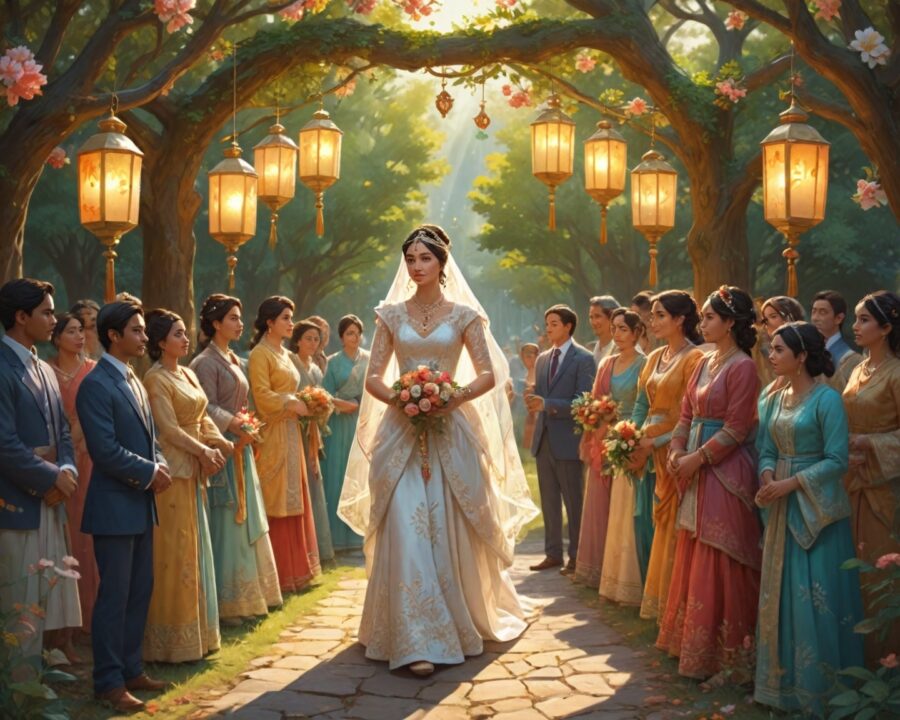
Introduction to Weddings as Cultural Mirrors
Weddings are more than just celebrations of love and commitment; they are reflections of cultural heritage and identity. Across the globe, wedding ceremonies are imbued with customs and traditions that represent the values, beliefs, and histories of the communities they originate from. Each element of a wedding can be seen as a cultural mirror, reflecting the diverse tapestry of human experience and the particularities of national heritage.
These ceremonies offer unique insights into the ways different societies express notions of unity and continuity. From the vibrant festivities of Indian weddings to the peaceful solemnity of a Japanese Shinto wedding, each ceremony is a manifestation of a people’s collective memory and social evolution. By examining weddings through this cultural lens, we can gain a richer appreciation of global diversity and the intricate ways in which cultural wedding traditions are woven into the fabric of society.
The Role of National Heritage in Wedding Ceremonies
National heritage plays a significant role in shaping wedding ceremonies, influencing everything from the rituals performed to the attire worn by the bride and groom. Each culture has its distinct interpretation of unity and commitment, governed by stories passed down through generations, religious beliefs, and local customs. This heritage acts as a guiding force, ensuring that wedding celebrations remain anchored in historical significance.
In many cultures, weddings are seen as an opportunity to showcase national pride. The ceremonial rites are not only personal but also communal, reflecting the broader societal values. Heritage influences the choice of location, the selection of traditional music, the sequence of events, and even the wedding menu. In Greece, for instance, the use of koufeta (sugar-coated almonds) symbolizes both the bitter and sweet aspects of life and marriage, a nod to the dualities inherent in shared histories.
Furthermore, national heritage in weddings serves as a connective thread that links past, present, and future. Engaging with these traditions allows communities to maintain a sense of continuity and identity. Whether subtle or pronounced, these cultural wedding traditions are key in preserving the rich histories and collective memories of societies.
Examples of Traditional Wedding Customs Around the World
Traditional wedding customs around the world highlight the incredible diversity and creativity inherent in human traditions. Each culture has developed its unique set of practices that encapsulate its historical evolution and intrinsic values.
In India, weddings are often lavish multi-day events filled with vibrant colors, intricate rituals, and joyous celebrations. The Saptapadi, or “Seven Steps,” is a crucial part of Hindu weddings, where the couple takes seven vows around a sacred fire, symbolizing their commitment to each other and to their shared life journey. The importance of family and community is evident, with ceremonies designed to unite both families in harmony.
Japan’s Shinto weddings emphasize simplicity and spirituality, focusing on the spiritual union rather than material displays. During the ceremony, the couple partakes in the San-san-kudo rite, which involves the exchange of sake in three sips from three different cups. This custom represents an exchange of vows and both families coming together in unity under the guidance of divine spirits.
In contrast, Scottish weddings might incorporate the “Quaich” ceremony, where the bride and groom drink from a two-handled cup to symbolize the shared love and trust between them. These diverse practices demonstrate the dynamic expressions of cultural wedding traditions, with each custom serving as a living testament to a community’s spiritual and social heritage.
How Cultural Values Shape Wedding Rituals
Cultural values fundamentally shape how wedding rituals are conceived and executed. These values dictate what is considered sacred and essential during a wedding ceremony, often embedding layers of meaning within each act.
In many cultures, the significance of family and community is a primary value reflected in wedding ceremonies. For example, African weddings often involve community-wide celebrations featuring music, dance, and storytelling. The ritual of “jumping the broom” in African American weddings is steeped in historical significance, symbolizing a connection to ancestral traditions and the start of a new chapter in life.
Respecting elders is another cultural value that frequently surfaces in wedding rituals. In Korean weddings, the tradition of Pyebaek—a post-wedding ceremony where the newlyweds bow to their elders and receive wisdom and blessings—is a testament to the importance of familial respect and continuity.
The notion of purity and blessing is prevalent in many cultures, often symbolized through specific ceremonies and attire. In Western cultures, for instance, the tradition of wearing white signifies purity, a value revered and perpetuated through generations. Each ritual is a reflection of underlying cultural values, providing continuity and preserving the essence of communal beliefs through generations.
Symbolism in Wedding Traditions and Attire
Symbolism is deeply intertwined with wedding traditions and attire, transforming ceremonies into rich narratives filled with metaphors. Each symbol used during a wedding serves to convey a story or a value cherished by the culture from which it originates.
A universal symbol of weddings is the exchange of rings, representing eternity and the unbroken circle of love. This simple yet profound act is embraced in numerous cultures worldwide, each with its unique interpretation and significance. Often crafted from metals such as gold and silver, rings symbolize longevity and worth, mirroring the enduring promise of marriage.
Wedding attire often holds symbolic meaning as well. In Chinese weddings, the traditional red qipao worn by brides symbolizes good luck, prosperity, and happiness. Red is considered an auspicious color, meant to bless the couple with a fortunate marriage. Similarly, in Maori cultural wedding traditions from New Zealand, the korowai, a woven cloak worn by the bride and groom, signifies prestige and honor, adorned with intricate symbols relevant to their tribe and heritage.
Wedding symbols, whether found in rituals or attire, articulate deeper meanings and preserve ancestral wisdom. Through these symbols, weddings become more than ceremonies—they transform into cultural narratives that celebrate both individual unions and shared histories.
The Influence of History on Modern Wedding Practices
Modern wedding practices are often shaped by historical influences, adapting traditional elements to contemporary tastes and sensibilities. As societies evolve, weddings blend the old with the new, creating fresh interpretations of time-honored traditions.
The white wedding dress, popularized by Queen Victoria of England in the 19th century, is a prime example of historical influence on modern weddings. Although white dresses symbolize purity across many cultures today, prior to Victoria’s era, brides wore gowns in various colors. The queen’s choice of a white gown paved the way for a widespread fashion trend that endures in many Western cultures.
Incorporating historical elements is not merely an attempt to preserve customs but also to establish a dialogue between tradition and modernity. The dowry system, once a common practice in many cultures, has transformed into other gestures such as the bride price in regions of Africa or modern gifts in Western societies. These evolved customs are adapted to fit the socio-economic realities and new values, while respecting historical precedents.
History serves as a reference point for modern wedding practices, informing how couples choose to honor traditions while expressing their unique identities. Through the amalgamation of the past and present, weddings continue to evolve, offering opportunities to revisit history in a way that resonates with today’s world.
Common Questions About Preserving Heritage in Weddings
How can couples balance modern desires with traditional expectations in their weddings?
Couples can balance modern desires with traditional expectations by carefully selecting elements that resonate with their shared values and identities. By integrating contemporary ideas with cherished customs, couples can create a personalized ceremony that honors both their individual and cultural backgrounds.
Are there ways to include multiple cultural heritages in a single wedding ceremony?
Yes, a multicultural wedding can be created by thoughtfully combining elements from each heritage, such as incorporating different rituals, attire, and music. Collaboration and communication between families can ensure a meaningful and inclusive celebration.
How important are traditional venues in preserving wedding heritage?
Traditional venues often hold historical and cultural significance, enhancing the atmosphere and authenticity of a wedding ceremony. While not a strict necessity, selecting such a venue can strengthen the connection to one’s heritage and enrich the overall experience.
Can modern wedding themes coexist with traditional cultural wedding traditions?
Absolutely, modern wedding themes can coexist with cultural wedding traditions by creatively integrating new ideas into conventional frameworks. This approach allows couples to honor their heritage while expressing their personal style and contemporary vision.
How can couples ensure that their wedding rituals are respectful to their cultural roots?
Couples should conduct thorough research to understand the origins and meanings of the rituals they wish to incorporate. Consulting with family members or cultural experts can also provide valuable insights and guidance, ensuring respectful representation.
Is it appropriate to adapt certain cultural wedding traditions for diverse guest groups?
Adaptation can be appropriate if handled with sensitivity and respect, ensuring guests from diverse backgrounds feel welcomed and included. Clear explanations or introductions to customs can enhance understanding and participation among guests unfamiliar with specific traditions.
What is the significance of food in cultural wedding traditions?
Food plays a central role in cultural wedding traditions, often symbolizing prosperity, community, and shared happiness. Offering traditional dishes can enhance cultural connections, showcase culinary heritage, and provide an opportunity to share cultural narratives through gastronomy.
How to Incorporate National Heritage Into Your Wedding
To incorporate national heritage into a wedding, couples can focus on elements that hold personal and cultural significance. Thoughtful integration of these elements can create a unique ceremony that both honors tradition and reflects the couple’s individuality.
-
Venue Selection: Choose a venue that resonates with your cultural background. This could be a historical site, a family home, or a place of worship that holds cultural or spiritual importance.
-
Ceremony Rituals: Incorporate rituals that hold significance in your national heritage. These could include specific vows, blessing rituals, or symbolic gestures that reflect your cultural roots.
-
Attire: Select attire that represents your heritage. This might involve traditional dresses, fabric patterns, or adornments that carry cultural symbolism. Collaborating with designers familiar with traditional attire can enhance authenticity.
-
Music and Dance: Choose music and dance forms that reflect your cultural heritage, whether it’s ceremonial songs, folk dances, or traditional instrumental compositions.
-
Cuisine: Serve traditional dishes that represent your national heritage. A diverse menu can allow you to share family recipes or regional delicacies with your guests.
-
Decor: Use decor elements that echo cultural motifs, patterns, or colors. Whether in table settings, floral arrangements, or stage designs, these can visually connect guests to your heritage.
By thoughtfully incorporating these elements into a wedding, couples can craft a memorable event that bridges personal dreams with ancestral legacy.
The Importance of Weddings in Cultural Preservation
Weddings play a pivotal role in cultural preservation, serving as living expressions of a community’s heritage and values. Through each ceremony, a rich repository of customs, rituals, and symbols is passed down, ensuring continuity of traditions across generations.
One of the most potent aspects of cultural preservation is the educational opportunity it provides. Weddings are often intergenerational events, bringing together diverse age groups in a shared experience. Young attendees witness traditions first-hand, gaining insights into their cultural origin stories and the significance of their heritage. This firsthand experience fosters a sense of identity and belonging, cultivating a desire to maintain these traditions in their own future ceremonies.
Moreover, weddings are occasions for storytelling and the transmission of cultural narratives. Through speeches, toasts, and rituals, stories of family history and cultural evolution are shared, enriching participants’ understanding of their place within a broader social fabric. These stories serve as repositories of ancestral wisdom and collective experiences, contributing to the perpetuation of cultural identities.
As societies become increasingly interconnected, weddings offer a unique opportunity to reaffirm cultural uniqueness while fostering mutual understanding and appreciation among diverse communities. In this way, weddings are not only personal milestones but also vital agents in the preservation and celebration of cultural heritage.
Conclusion: Celebrating Diversity Through Wedding Traditions
Weddings are profound celebrations that hold far more significance than a mere contractual union between individuals. They are vibrant cultural events that mirror the cultural wedding traditions and national heritage of societies worldwide. Each ceremony provides a glimpse into the histories, values, and emotions that define a community, offering insights into their collective story.
In exploring wedding traditions, we uncover the myriad ways in which cultures express their unique identities and pass on cherished legacies. These events honor the past, enrich the present, and inspire the future, highlighting the importance of preserving cultural heritage. By embracing this diversity, we not only honor our individual identities but also contribute to a global tapestry of human culture, fostering a deeper understanding and appreciation among all people.
Ultimately, weddings are celebrations of diversity and unity. As they evolve and adapt, integrating modern influences with age-old customs, they testify to the enduring power of love and the unyielding bond between people and their heritage. Let us celebrate this diversity in wedding traditions, recognizing their vital role in shaping and preserving the rich diversity of human experience.