
Introduction to Mount Olympus and Its Significance
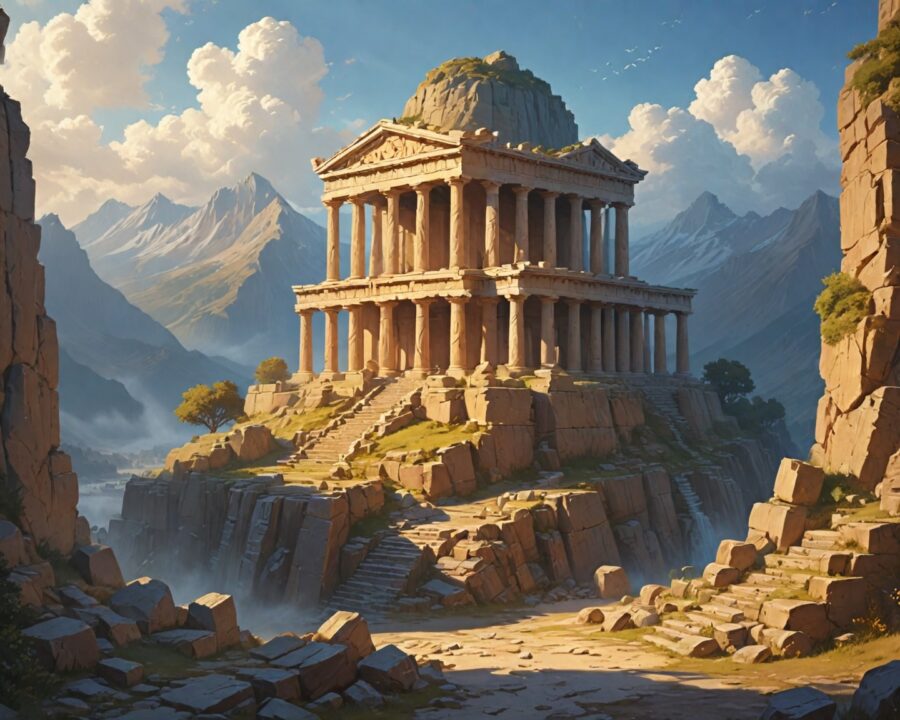
Rising majestically to 2,917 meters, Mount Olympus is not only the highest peak in Greece but also a cornerstone of ancient Greek mythology and culture. Standing at the border of Thessaly and Macedonia, its mythical status originates from the shimmering clouds that often cloak its jagged peaks, lending an air of mystery and wonder. Through the centuries, Mount Olympus has been revered as the divine abode of the Greek gods, providing both a literal and metaphorical pinnacle for the religious beliefs and practices of ancient Greeks.
The significance of Mount Olympus extends beyond its sheer physical stature. As a focal point of Greek mythology, it served as a celestial seat of power and home to the pantheon of gods who influenced every aspect of life and nature. With stories emanating from its mist-laden summits, Mount Olympus became a sacred landscape, interweaving myth with the daily spiritual and cultural practices of Greek society. Its continued resonance in modern times speaks to its enduring symbolic power and the captivating allure of its mythological heritage.
The Role of Mount Olympus in Greek Mythology
Mount Olympus stands as the mythical seat of the twelve Olympian gods, who were believed to reside atop the mountain where they governed the cosmos and human affairs. Its portrayal as an ethereal realm, inaccessible to mere mortals, served to amplify its sanctity and the supernatural power of its divine inhabitants. The ancient Greeks personified natural elements and luminal spaces in this mythological framework, creating a universe where the gods ruled from their lofty abode on Olympus.
In the myriad of myths and stories surrounding Olympus, the mountain serves as a backdrop for numerous divine episodes. Myths of intense drama involving Zeus, the king of the gods, along with Hera, Athena, and others, depict Olympus as the scene of divine machinations and epic tales. It was said to be the site of grand feasts and heated councils where the fate of humans and gods alike would hang in balance. These myths offer insight into how the Greeks viewed the world, seen not only as a place of sublime beauty but as a stage for the capricious whims and power struggles of immortals.
The cultural impact of such myths is profound. They transcended simple storytelling, operating as parables that dictated moral and ethical codes, bolstered social norms, and provided a shared mythology that fortified community identity. From the majestic perch of Olympus, gods influenced everything from the changing of the seasons to the fates of ancient city-states, embodying an interconnectedness that shaped religious practices and societal structures.
Why the Greeks Considered Mount Olympus Sacred
The Greeks considered Mount Olympus sacred for a multitude of reasons, chief among them was its mythological significance. As the mythic home of the Olympian gods, Mount Olympus existed as a divine realm, a stark contrast to the mortal world below. This sacred status further reinforced the division between the gods and humans, framing the mountain as both a sanctuary of great religious importance and an emblem of mysterious celestial power.
The Greeks believed that Mount Olympus was the center of the universe, a cosmic hub that embodied the gods’ omnipresence in their lives. The mountain’s physical majesty, with its daunting peaks and mystical mist, reinforced its role as a divine throne, unreachable and eternal. To the ancient Greeks, Olympus was more than geographical—it was spiritual, embodying the divine comfort in the belief of an ordered universe governed by omnipotent deities.
Beyond its positioning as the home of their gods, Mount Olympus was also revered for its natural beauty and the life-giving resources it offered, such as water and rich soil for cultivation. It functioned as a source of inspiration where the sacred and tangible intertwined, fostering a profound reverence that fueled religious practices like offerings, oracles, and orations. This blend reinforced its sanctity within Greek culture, making it a central figure in both personal piety and communal religious identity.
The Twelve Olympian Gods and Their Connection to the Mountain
The Twelve Olympian gods formed a divine council residing atop Mount Olympus, each with unique attributes and domains of influence that mirrored aspects of life and nature integral to Greek society. This pantheon included:
- Zeus – King of the gods and ruler of the sky
- Hera – Goddess of marriage and family
- Poseidon – God of the sea
- Demeter – Goddess of the harvest
- Athena – Goddess of wisdom and war
- Apollo – God of the sun and music
- Artemis – Goddess of the hunt
- Ares – God of war
- Aphrodite – Goddess of love and beauty
- Hephaestus – God of fire and craftsmanship
- Hermes – Messenger of the gods
- Hestia – Goddess of the hearth
Each deity’s association with Mount Olympus solidified the mountain’s role as a divine epicenter. Zeus, residing on Olympus’s highest peak, exemplified supreme authority and the quest for order over chaos. The gods’ connections to natural and societal elements reinforced the importance of Olympus as a sacred symbol of balance and power.
The stories woven around these gods often emphasized their connections to Olympus. For instance, the quarrels between Athena and Poseidon or the union of Zeus and Hera are flavored by the actions conducted from their exalted seats. Moreover, the narratives reflect the belief that these deities actively influenced earthly events and human affairs, further cementing Olympus as a cultural and spiritual beacon.
Mythological Stories Centered Around Mount Olympus
Mount Olympus is frequently featured in Greek mythology, both as a backdrop and a catalyst for legendary tales. Among the most famous narratives is the fall of the Titans, where Zeus and the Olympians defeated the primordial deities in a cataclysmic battle known as the Titanomachy. This event, taking place around Olympus, signaled the establishment of the Olympian order, elevating the gods to their celestial home and highlighting the mountain’s mythological importance.
Another renowned story is the myth of Prometheus, who dared to defy Zeus by stealing fire from Olympus to bestow it upon humanity. This act of rebellion symbolized enlightenment and progress, positioning Olympus as a source of divine inspiration and transgression. Prometheus’s tale embodies the duality of Olympus—both as a source of divine benevolence and punishment, emphasizing its sacred and feared nature.
The myth of Aphrodite and Ares’s affair, discovered by the cunning Hephaestus, also finds its stage in Olympus, highlighting the gods’ human-like flaws and affections. These vivid stories, embedded within Olympus’s mythical mystique, were more than entertainment. They reflected philosophical musings on human conditions, the interplay of fate and free-will, underscoring Olympus not only as a symbol of divine authority but as a narrative cornerstone in Greek mythology.
Mount Olympus as a Symbol of Divine Authority
Mount Olympus emerged as a symbol of divine authority in ancient Greek culture, embodying the gods’ supreme power over the cosmos and human destiny. The towering mountain was perceived as a celestial abode where the divine hierarchy reigned supreme, and gods convened to dictate the fate of both gods and humans. The representation of Olympus as an imposing natural feature, perpetually beyond mortal reach, enhanced its status as a symbol of omnipotence and reverence.
Olympus’s symbolism extended beyond its role as a mythological residence. As a cultural icon, it reinforced the idea of a structured universe where divine order prevailed, reflecting the Greeks’ desire for stability and harmony. Within this framework, the mountain served as a metaphoric representation of the balance between chaos and order, continually reminding the ancient Greeks of the gods’ dominion over natural and societal realms.
The enduring legacy of Mount Olympus as a symbol of divine authority is evident in its continuous representation in art and literature. Inscriptions, pottery, and sculptures often depicted the gods overlooking from Olympus, illustrating their supremacy and omniscient presence. This symbolic power transcended mere tradition, aligning with Greek philosophical and spiritual beliefs that esteemed the gods as eternal overseers, fostering a shared cultural identity centered around the divine mountain.
Cultural and Religious Practices Tied to Mount Olympus
Religious and cultural practices in ancient Greece were deeply intertwined with the reverence of Mount Olympus. The mountain’s sacred status absorbed into rituals and ceremonies that honored the gods and sought their favor. Offerings of food, wine, and incense were made to the Olympians, often coinciding with festivals and religious observances that celebrated mythological events or sought divine intervention in worldly matters.
The festivals, such as the Olympic Games held every four years at Olympia, were reflective of the profound religious and cultural importance of Mount Olympus. These gatherings were not only athletic competitions, but also occasions for artistic expression, religious observance, and political diplomacy. They provided a vital opportunity for unity, allowing city-states to engage in peaceful competition while venerating their ancestral deities.
Additionally, oracles and priests played prominent roles in facilitating the spiritual connection between Mount Olympus and the people. Temples dedicated to Olympian gods served as centers for worship and guidance, while priests interpreted messages believed to emanate from the divine heights of Olympus. This structured practice ensured that the mountain’s sacred aura was maintained, reinforcing its central role in maintaining the religious and cultural fabric of Greek society.
How Mount Olympus Influenced Ancient Greek Society
Mount Olympus’s iconic presence significantly influenced the structure and ethos of ancient Greek society. As a revered symbol of divine power, it reinforced the hierarchical nature of Greek culture, where the gods’ will was considered paramount. This influence was pervasive, informing political systems, legal codes, and social norms that reflected the mythology and moral lessons from Mount Olympus.
The worldview defined by the mythology of Olympus played a crucial role in shaping cultural values and societal expectations. Themes of heroism, virtue, and piety—rooted in worship and appeasement of the gods—pervaded Greek literature, philosophy, and daily life. These ideals were often embodied by heroes and demigods, whose exploits and moral dilemmas echoed the mythological sagas associated with Olympus.
Furthermore, the emphasis on unity and identity surrounding Mount Olympus contributed to the sense of collective identity among the Greek city-states. Although politically fragmented, the shared religion and cultural heritage tied to Olympus offered a common thread that transcended local differences. This spiritual bond encouraged collaboration and coexistence, fostering a society that, despite its diversity, remained closely knit under the gaze of their celestial mountain.
Modern Interpretations of Mount Olympus in Culture
The legacy of Mount Olympus endures in modern culture, serving as an enduring source of inspiration and metaphor. From literature to movies and television, the mythological narratives associated with Olympus continue to captivate audiences with tales of heroism, treachery, and divine interplay. This mythos persists as a rich vein for exploration in contemporary storytelling, where familiar gods and legendary heroes are reimagined against modern backdrops.
Literary works, such as Rick Riordan’s “Percy Jackson & the Olympians” series, recast ancient myths within the modern world, bringing the mystical world of Olympus to life for new generations. These stories highlight timeless themes while making mythology accessible and relevant to today’s audience. Similarly, films and television series frequently draw on the rich tapestry of Greek mythology, capturing the imagination with their reinterpretations of godly dramas and epic quests.
Beyond entertainment, Mount Olympus holds intrinsic value in academic and philosophical discourse. Scholars and theologians often revisit the narratives and symbolisms associated with Olympus, unraveling ancient wisdom and reflecting on human nature and existential dilemmas. This ongoing fascination speaks to the timeless appeal of Mount Olympus as a cultural and intellectual touchstone, steadfast in its symbolic resonance.
Visiting Mount Olympus Today: A Guide for Travelers
For those inspired by its legendary allure, visiting Mount Olympus is an opportunity to connect with its rich history and natural beauty. The site, now a designated national park, offers an array of hiking trails that traverse its varied terrain, catering to both seasoned climbers and casual hikers. The trail to Mytikas, the highest peak, provides an invigorating challenge with breathtaking views, encapsulating the majestic essence of Olympus.
Travelers can explore the area through guided tours or self-guided adventures, with opportunities to discover hidden historical gems, such as Dion, an ancient city at the mountain’s base. As one delves deeper into the park, the lush landscapes dotted with flora and fauna unfold, framing the mythic aura that once enchanted the ancients. Mount Olympus’s natural habitats offer a tangible connection to the myths and legends that have passed through generations.
When planning a visit, travelers should prepare adequately for the unpredictable weather conditions characteristic of mountainous areas. Essentials include durable hiking gear, navigation tools, and supplies for safety and nourishment. Moreover, respecting the natural environment is crucial, ensuring that the sacred legacy of Mount Olympus is preserved for future generations to explore and be inspired by its enduring mystique.
FAQ
What is the historical significance of Mount Olympus?
Mount Olympus holds historical significance as the revered home of the twelve Olympian gods in Greek mythology. It represented divine power and provided a foundation for cultural and religious practices that influenced ancient Greek society.
Who are the twelve Olympian gods associated with Mount Olympus?
The twelve Olympian gods are Zeus, Hera, Poseidon, Demeter, Athena, Apollo, Artemis, Ares, Aphrodite, Hephaestus, Hermes, and Hestia. They each embody various elements and aspects of life and nature.
How did Mount Olympus influence Greek culture?
Mount Olympus influenced Greek culture by reinforcing the value of religious beliefs and mythological narratives. These beliefs shaped societal norms, moral values, and provided a sense of identity among the Greek city-states.
What role does Mount Olympus play in modern popular culture?
In modern popular culture, Mount Olympus serves as a backdrop for reimagined literary and cinematic narratives, often exploring themes of heroism and divine intrigue in contemporary settings.
Can visitors climb Mount Olympus?
Yes, visitors can climb Mount Olympus via several trails ranging in difficulty, including the route to Mytikas, its highest peak. It is advisable to prepare with suitable gear and supplies.
Is Mount Olympus a natural reserve?
Mount Olympus is designated as a national park, protecting its rich biodiversity and historical sites, and offering extensive opportunities for recreation and exploration.
What is the best time to visit Mount Olympus?
The best time to visit Mount Olympus is typically late spring to early autumn, when weather conditions are more favorable for hiking and outdoor activities.
Are there any entry requirements for visiting Mount Olympus?
No special entry requirements exist for visiting Mount Olympus, but visitors are expected to respect national park regulations, such as protecting wildlife and adhering to guidelines for sustainable tourism.
Recap
Mount Olympus stands as a prominent symbol in Greek mythology, revered as the home of the Olympian gods and a central element in ancient Greek culture. Its sacred status and mythological significance have profoundly influenced religious practices, societal values, and cultural narratives throughout history and into modern times. The stories that emerge from its mythos continue to inspire contemporary interpretations in literature, art, and media, underscoring Olympus as an enduring symbol of divine authority and creative inspiration.
Conclusion
Mount Olympus remains more than a geographical landmark; it is a repository of cultural heritage, encapsulating the spiritual essence and mythological narratives central to ancient Greek identity. Its storied landscapes have fostered a rich tapestry of myths that extends beyond history into the very fabric of human culture and imagination. The narratives born in its shadow serve as a continuous source of inspiration, offering timeless lessons that resonate with modern societies.
The symbolism of Mount Olympus as the epicenter of divine authority reflects the universal human quest for meaning and order. As much as it was a seat for deities, Olympus is a timeless mirror reflecting humanity’s aspirations, conflicts, and triumphs. In connecting with its legacy, visitors and scholars alike are drawn into a dialogue with the past, contemplating the intersection of myth, culture, and nature.
Exploring Mount Olympus today, travelers find themselves immersed in a living history, walking paths once believed to be trodden by gods. As they ascend its slopes, the echoes of ancient myths enrich their journey, offering a unique convergence of past and present. Through its majestic resonance, Mount Olympus continues to captivate hearts and minds, a testament to its lasting influence and the enduring power of mythology.