
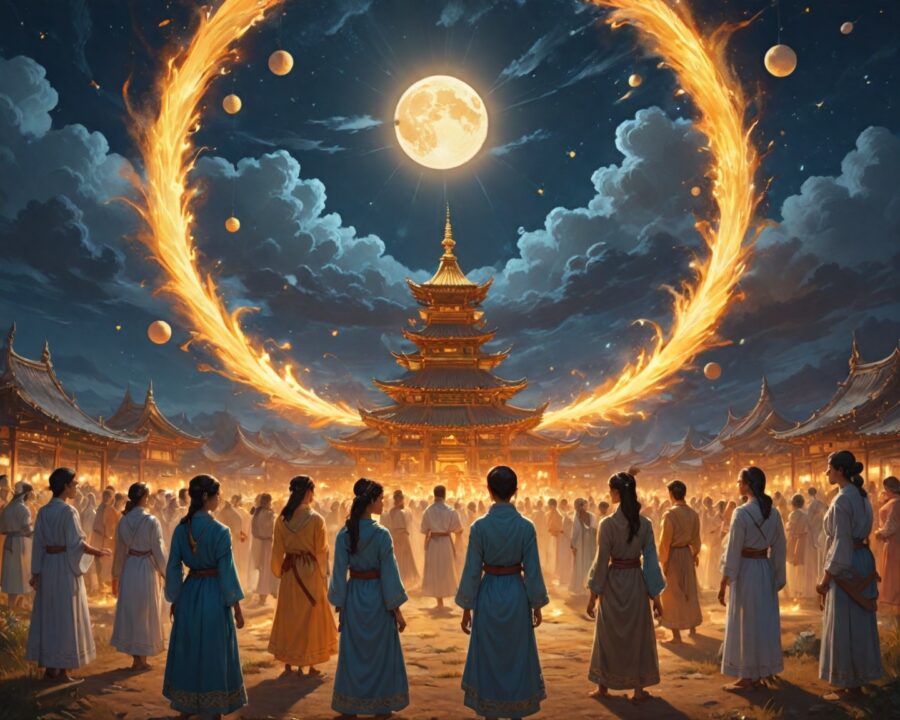
Introduction to Lunar and Solar Calendars
Calendars are fundamental tools for organizing time, and their invention marked a turning point in human history. The two primary systems of reckoning time are the lunar and solar calendars. Each system has unique characteristics, and though they are different, both share the common goal of helping societies track the passage of days, months, and years. These calendars have played a significant role in shaping not only how people understand time but also in influencing cultural and religious practices around the world.
In many societies, festivals are an integral part of cultural identity, and the timing of these celebrations is often dictated by lunar or solar calendars. By understanding these timekeeping systems, we can gain insights into the rich tapestry of global traditions and the various ways cultures mark the passage of time. In this article, we will explore the distinct characteristics of lunar and solar calendars, examine festivals associated with each, and delve into how these timekeeping systems influence modern cultural identities.
Key Differences Between Lunar and Solar Calendars
The lunar and solar calendars differ fundamentally in how they measure the passage of time. The lunar calendar is based on the cycles of the moon, with each month beginning with the new moon and ending with the full moon. This system typically results in a year that is approximately 354 days long, as twelve lunar cycles do not fully align with the solar year. The solar calendar, on the other hand, is based on the Earth’s orbit around the sun, comprising approximately 365.25 days in a year.
The differences in these time reckoning systems also lead to variations in how months and years are structured. In a solar calendar, each month does not necessarily sync with the same phase of the moon every year, but it aligns with the seasonal equinoxes and solstices. By contrast, lunar calendars, such as the Islamic calendar, have months that shift against the seasons because they strictly follow the moon’s phases without adjusting for the solar year.
These fundamental differences mean that the timing of festivals, agricultural cycles, and significant cultural events can vary dramatically. For instance, a festival on a lunar calendar may appear to “move” each year relative to the solar calendar. This disparity often leads to an interesting diversity in global calendars, requiring societies to adapt their systems to accommodate both lunar and solar aspects for daily living and cultural observance.
Examples of Festivals Based on the Lunar Calendar
Lunar calendar festivals are celebrated across various cultures, deeply embedded in history and tradition. One of the most well-known lunar calendar festivals is the Chinese New Year, also known as the Spring Festival. This celebration marks the beginning of the lunar new year and usually falls between late January and mid-February on the Georgian calendar. It is a time for families to gather, feast, and honor ancestors, with rituals that include dragon dances and the lighting of fireworks.
Another significant festival is Ramadan, a sacred month of fasting in Islam, which also follows the lunar calendar. The month begins with the sighting of the new moon and ends with Eid al-Fitr, a festival of breaking the fast. The timing of Ramadan shifts each year by about 10 to 12 days earlier than the previous year, due to the shorter lunar calendar cycle compared to the solar calendar.
Vesak, known as Buddha Day, is another festival that utilizes the lunar calendar. Celebrated by Buddhists globally, Vesak commemorates the birth, enlightenment, and death of Buddha. The festival falls on the full moon day of the lunar month of Vesakha, which usually corresponds to April or May in the solar calendar.
Examples of Festivals Based on the Solar Calendar
Unlike the lunar calendar, festivals based on the solar calendar are fixed to specific dates and seasons. Christmas, celebrated on December 25th, is one of the most universally recognized festivals based on the solar calendar. Although its exact origin is tied to theological events, its timing corresponds with the winter solstice, a significant period marking the lengthening of days.
Another festival deeply rooted in the solar calendar is Navruz, the Persian New Year, which aligns with the vernal equinox on March 20th or 21st each year. This festival marks the beginning of spring and is celebrated by a wide array of ethnicities and cultures throughout Central Asia and the Middle East. Navruz is symbolized by themes of renewal and growth, aligning with the natural rebirth of the environment.
In the Western world, Halloween, celebrated on October 31st, is based on the solar calendar and corresponds with Samhain, a Celtic festival marking the end of the harvest season and the start of winter. This date holds a significant place in the solar calendar as it stands halfway between the Autumn equinox and the Winter solstice.
How Cultures Decide Which Calendar to Follow
The decision of which calendar to follow in any given culture is often influenced by a mix of religious, agricultural, and historical factors. Religious beliefs play a crucial role; for example, the Islamic world universally follows the lunar calendar to determine religious observances like Ramadan. This decision holds spiritual significance, as it aligns with the birth of the Islamic calendar in 622 CE, the Hijri year.
Agricultural needs also significantly influence calendar choice. In agrarian societies, solar calendars are preferred because they align with the agricultural cycles. Understanding the relationship between the Earth’s position relative to the Sun allows cultures to predict and prepare for planting and harvest seasons, which are crucial for survival.
Cultural history and colonization can also influence a society’s choice of calendar. For instance, many of the Western countries use the Gregorian calendar, a solar calendar, which was introduced by Pope Gregory XIII in 1582 to realign the days with equinoxes and solstices. This change also addressed discrepancies in the Julian calendar, affecting Easter’s calculation in the Christian world.
The Role of Astronomy in Calendar-Based Festivals
Astronomy has been pivotal in the development and maintenance of both lunar and solar calendars. The accurate tracking of lunar phases and solar cycles requires precise astronomical observations and calculations, which have been refined over millennia. These celestial events are fundamental for determining the exact timing of many festivals.
For example, the Jewish festival of Passover begins on the 15th day of Nisan, a month in the Jewish lunar calendar defined by the presence of a full moon during the spring equinox. Similarly, Diwali, the Hindu Festival of Lights, is aligned with the new moon of the month Kartika, showcasing a careful balance of lunar phases and solar movements.
Astronomical tools like sundials and astrolabes were historically used to monitor celestial bodies. The advent of modern technology, including telescopes and satellites, has allowed contemporary societies to compute time with remarkable precision. This precision enables communities to maintain traditional observances precisely as they are intended, preserving cultural continuity.
Common Misconceptions About Lunar and Solar Festivals
A common misconception about calendar-based festivals is that they are static events that do not change. While solar calendar festivals generally occur on the same date each year, their cultural expressions can evolve and differ depending on societal factors and regional interpretations.
Similarly, lunar festivals are often misunderstood as irregular because their dates fluctuate annually against the solar calendar. However, these festivals do indeed adhere to precise lunar cycles, which may not align consistently with solar dates but are reliably predictable within their own framework.
Another misconception pertains to the universality of these festivals. Some imagine that festivals based on the lunar or solar calendar are celebrated in a uniform fashion worldwide. In reality, while globally recognized, festivals often adopt unique local customs and traditions, reflecting the diverse cultural landscapes in which they are celebrated.
How Calendar-Based Festivals Influence Cultural Identity
Calendar-based festivals are one of the most vibrant expressions of cultural identity, serving as vehicles for cultural values, social norms, and historical memory. Through these festivals, communities can convey essential narratives, reinforcing and passing down traditions from one generation to the next.
These festivals, particularly those connected to lunar or solar calendars, offer a sense of continuity and belonging. They serve as annual touchstones that mark the passage of time not just as a mechanical progression of days and months but as a communal journey through shared experiences. By celebrating these festivals, communities affirm their bonds and shared histories, which are foundational to cultural identity.
Moreover, in our globalized world, traditional festivals provide a crucial anchor for diaspora communities. As people move and resettle, the continuation and adaptation of these festivals help maintain cultural identities and foster a sense of community in new environments, allowing for the preservation of heritage across generations and geographies.
Modern Adaptations of Traditional Calendar Festivals
In the contemporary world, traditional calendar festivals are continually adapted to accommodate the changing needs and contexts of societies. Through globalization, festivals that were once local or regional can now be found spread across continents, with communities absorbing and altering traditions to meet their modern lifestyles.
For example, Chinese New Year celebrations have evolved beyond traditional gatherings at home to include public parades and global broadcasts, showcasing their rich heritage to an international audience. Similarly, Diwali, celebrated in many countries with large Indian diaspora communities, often incorporates local practices while retaining its core festive characteristics.
Moreover, technology has significantly influenced how festivals are experienced. Virtual platforms and digital broadcasting now allow those who cannot partake in person to experience these celebrations remotely, offering new ways of engagement and participation. These adaptations enable traditional festivals to maintain relevance in a rapidly changing world, ensuring their survival and evolution into the future.
Practical Tips for Experiencing Calendar-Based Festivals
For those keen on experiencing calendar-based festivals, preparation and cultural sensitivity are key. Here are some practical tips to enhance your festival participation:
-
Research and Learn: Gain an understanding of the festival’s origins, significance, and customs. Familiarize yourself with the calendar system it follows—lunar or solar—as well as the cultural nuances specific to the festival.
-
Attend Events: Participate in local events or gatherings where these festivals are celebrated. Whether it’s a public parade, a religious ceremony, or a cultural showcase, immersing yourself in the community’s activities can enrich your experience.
-
Respect Local Traditions: While participating, show respect for the traditions and customs. Dress appropriately if required, follow etiquette during ceremonies, and be mindful of cultural expressions and taboos.
-
Engage with the Community: Talk to locals and community leaders to gain deeper insights into the festival’s significance. This interaction can provide personal perspectives that enhance your understanding and appreciation of the festivities.
-
Be Open to New Experiences: Each festival offers a unique experience. Be open to trying new foods, participating in traditional dances, or engaging in religious practices if permissible.
By following these tips, you can engage with calendar-based festivals in a meaningful and respectful way, gaining a richer understanding of the cultural practices and traditions that shape these vibrant celebrations.
FAQ
What is the main difference between lunar and solar calendars?
The primary difference lies in the basis of time measurement. Lunar calendars are based on the cycles of the moon, resulting in shorter years of about 354 days, whereas solar calendars are based on the Earth’s orbit around the sun, comprising about 365.25 days annually.
How do lunar calendar festivals shift each year?
Since the lunar calendar is about 11 days shorter than the solar calendar, festivals celebrated according to the lunar system shift backward by about 10 to 12 days each year against the solar year.
Why do different cultures use different calendars?
Cultural variations in calendar systems arise from historical, religious, and agricultural influences. These elements determine the calendar most suitable for a society’s needs in time reckoning, religious observances, and seasonal activities.
Can lunar and solar calendars be reconciled?
Certain calendars, such as the Jewish and Chinese lunar-solar calendars, integrate aspects of both systems. They use lunar months but periodically add an extra month to synchronize with the solar year.
How has technology affected traditional calendar festivals?
Technology enables modern adaptations of traditional festivals, allowing for virtual participation and global broadcasts. This enhancement increases accessibility and allows broader participation while preserving traditional customs.
Are calendar-based festivals celebrated uniformly around the world?
No, while some festivals are globally recognized, they are celebrated with unique local customs reflecting regional cultural landscapes. These variations add richness and diversity to the festivals.
Recap
In summary, understanding lunar and solar calendars reveals the diverse ways societies perceive and organize time. Festivals based on these calendars reflect cultural identities, driven by astronomical cycles and historical traditions. While they differ in structure, both lunar and solar festivals offer profound opportunities to connect with heritage and express communal values. In modern times, these festivals continue to evolve, balancing tradition with contemporary relevance.
Conclusion
Calendars serve as a fundamental aspect of human civilization, offering structure and coherence to our understanding of time. The lunar and solar systems, while distinct in methodology, share the common goal of marking significant cultural milestones through festivals. These celebrations are vital conduits of cultural expression, connecting communities to their past and guiding them into the future.
As globalization continues to blur cultural boundaries, the importance of maintaining and adapting these festivals cannot be overstated. They offer a sense of identity and continuity in an ever-changing world, reminding us of the common threads of humanity that traverse time and space. By engaging with these rich traditions, we can foster a deeper appreciation for the diversity of cultural practices and the values they represent.
Ultimately, calendar-based festivals not only mark the passage of time but also illustrate the enduring human spirit’s capacity to innovate, adapt, and celebrate shared experiences, enriching the cultural tapestry of our global society. Whether rooted in the cycles of the moon or the orbit of the Earth, these festivals remain testaments to our collective heritage and contribute meaningfully to contemporary cultural landscapes.