
Introduction to Traditional Tattoo Cultural Meaning
Traditional tattoos hold a deep cultural significance across various societies, embodying historical narratives and personal stories. The traditional tattoo cultural meaning is not merely aesthetic; it encompasses rituals, beliefs, and identities that have been passed down through generations. In this article, we will explore the rich tapestry of traditional tattoos, delving into their origins, significance, and the techniques involved in their creation.
The fascination with tattoos extends beyond the skin. For many cultures, tattoos symbolize rites of passage, spiritual beliefs, and even social status. Each design carries its own narrative, making the art of tattooing a profound form of expression. This exploration aims to illuminate the multifaceted meanings behind traditional tattoos and how they resonate with contemporary audiences.
As we journey through the history and significance of these tattoos, we will uncover the various techniques used in their application and the modern perspectives that challenge and celebrate these ancient practices. By the end of this article, readers will gain a comprehensive understanding of traditional tattoo cultural meaning and its relevance today.
The Historical Roots of Traditional Tattoos
The Origins of Tattooing
The practice of tattooing dates back thousands of years, with evidence found in ancient civilizations such as the Egyptians, Polynesians, and Indigenous peoples of the Americas. For instance, the oldest known tattooed human remains, dating back to around 3300 BC, were discovered in the Alps and belong to a man known as Ötzi the Iceman. His tattoos were believed to have therapeutic significance, showcasing the early link between tattoos and healing practices.
In different cultures, tattoos served various purposes. In ancient Egypt, tattoos were often associated with fertility and protection, while in Polynesia, they represented social status and tribal affiliation. Each culture developed its own unique styles and meanings, contributing to the rich diversity of tattoo art.
The Evolution Through Time
As societies evolved, so did the art of tattooing. During the Age of Exploration, sailors and explorers brought tattooing practices back to Europe, where they began to influence local customs. The 19th century saw tattoos becoming popular among the working class and eventually gaining acceptance in mainstream society.
By the late 20th century, tattoos transitioned from symbols of rebellion to becoming a celebrated form of personal expression. Today, the historical roots of traditional tattoos continue to inspire modern artists, as they incorporate ancient techniques and designs into contemporary works.
Cultural Significance in Various Societies
Tattoos in Indigenous Cultures
Many Indigenous cultures regard tattoos as sacred expressions of identity and belonging. For instance, the Maori of New Zealand have a rich tradition of tattooing known as Ta Moko, where intricate patterns are carved into the skin, signifying lineage and personal achievements. Each moko tells a story of the wearer’s ancestry and social status.
Similarly, the Sami people of Northern Europe use tattoos to symbolize their connection to nature and their cultural heritage. These tattoos often feature elements from the natural world, such as animals and plants, representing the spiritual relationship between the Sami and their environment.
Modern Interpretations of Cultural Significance
In contemporary society, the cultural significance of tattoos has expanded beyond traditional meanings. Many individuals now choose tattoos to commemorate milestones, express personal beliefs, or honor loved ones. This shift has sparked a dialogue about cultural appropriation, as some designs may carry deep meanings in their original contexts.
As people celebrate cultural diversity through tattoos, it is essential to approach these practices with respect and understanding. This modern interpretation encourages dialogue about the importance of preserving traditional meanings while embracing personal expression.
Symbolism Behind Traditional Tattoo Designs
The Language of Symbols
Tattoo designs are often rich in symbolism, with each element bearing specific meanings. For example, in Japanese culture, koi fish tattoos symbolize perseverance and strength, while dragons represent protection and power. Such designs are not only visually striking but also convey profound narratives about the wearer’s life.
In Native American cultures, tattoos may feature animals and nature motifs, symbolizing personal totems or spiritual guides. These symbols often reflect the wearer’s relationship with their tribe and the natural world.
Decoding Common Tattoo Symbols
| Symbol | Cultural Meaning | Common Usage |
|---|---|---|
| Koi Fish | Perseverance and strength | Japan |
| Rose | Love and beauty | Western cultures |
| Skull | Mortality and rebirth | Various cultures |
| Feather | Freedom and spirituality | Native American |
The Art of Tattooing: Techniques and Tools
Traditional Tattooing Techniques
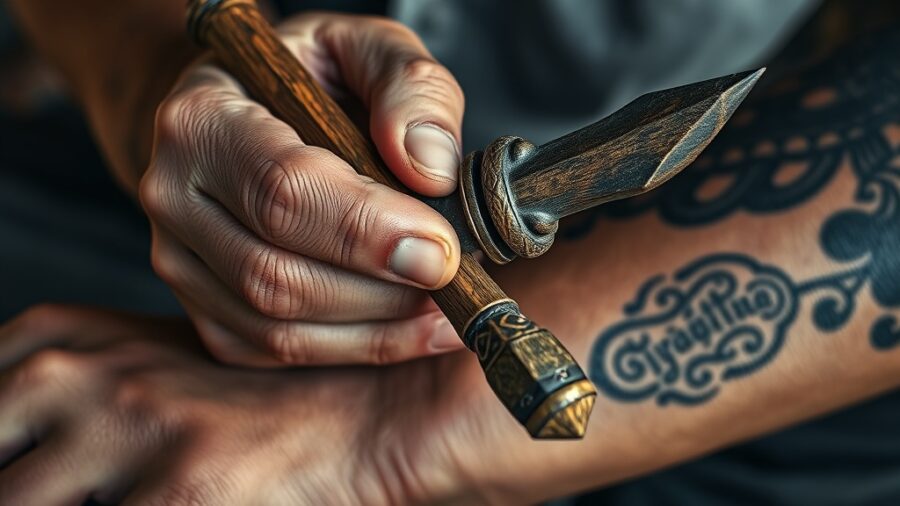
The techniques used in traditional tattooing vary significantly across cultures. For example, in Polynesian tattooing, the process often involves hand-tapping, where a wooden stick is used to tap a tattoo tool into the skin, creating intricate designs. This method is not only a form of art but also a ritual that connects the artist with the ancestral practices.
In contrast, Japanese tattooing, known as Irezumi, often utilizes the tebori technique, where the tattoo artist uses a handheld tool to apply ink in a meticulous manner. This technique requires years of training and expertise, emphasizing the importance of the artist’s skill and the cultural heritage behind the art.
Modern Tattoo Tools and Techniques
In contemporary tattooing, the introduction of electric machines has revolutionized the process, allowing for greater precision and efficiency. Artists now have access to a wide array of inks and tools, enabling them to create more complex designs than ever before. However, many traditional artists continue to honor ancient techniques, balancing modern innovation with historical practices.
Whether using traditional or modern methods, the artistry involved in tattooing remains a deeply personal and cultural endeavor, reflecting the unique stories and identities of individuals across the globe.
Contemporary Perspectives on Traditional Tattoos
Reclaiming Cultural Heritage
In recent years, there has been a movement to reclaim traditional tattoos as an essential aspect of cultural heritage. Many Indigenous artists are working to revive ancient practices and educate others about the significance of their designs. This resurgence fosters pride in cultural identity and encourages younger generations to connect with their roots.
Social media has played a crucial role in this movement, allowing artists to share their work and stories with a global audience. Platforms like Instagram have become vital for promoting traditional tattoo art, enabling cross-cultural exchanges and collaborations.
Challenges and Controversies
Despite the growing appreciation for traditional tattoos, challenges remain. Issues of cultural appropriation arise when non-Indigenous individuals adopt sacred designs without understanding their meanings. This can lead to the commodification of cultural symbols, stripping them of their significance.
To address these challenges, many artists advocate for respectful practices and seek to educate others about the importance of understanding the cultural meanings behind traditional tattoos. This dialogue is essential in fostering mutual respect and appreciation among different cultures.
Conclusion and Key Takeaways
Traditional tattoos are a powerful form of expression that encapsulates the rich cultural histories of various societies. From their ancient origins to contemporary interpretations, these tattoos serve as a bridge connecting individuals to their heritage, beliefs, and personal stories. Understanding the cultural meanings behind traditional tattoos is crucial in appreciating their significance and respecting the traditions they embody.
As we move forward in a globalized world, the importance of honoring and preserving these practices cannot be overstated. Engaging in respectful dialogue about cultural significance allows us to celebrate diversity while promoting understanding and connection among different communities. Whether through ancient techniques or modern adaptations, the art of tattooing will continue to evolve, carrying with it the stories of generations.
FAQs about Traditional Tattoo Cultural Meaning
What is the cultural significance of tattoos in Indigenous cultures?
Tattoos in Indigenous cultures often represent identity, heritage, and social status. They may symbolize rites of passage, personal achievements, or spiritual beliefs, serving as a connection to cultural roots.
How have traditional tattooing techniques evolved?
Traditional tattooing techniques have evolved from hand-tapping and other manual methods to include modern electric machines. While contemporary tools offer precision, many artists still practice ancient techniques to preserve cultural heritage.
What are some common symbols used in traditional tattoos?
Common symbols in traditional tattoos include koi fish (representing perseverance), roses (symbolizing love), and skulls (denoting mortality). Each symbol carries unique meanings across different cultures.
How can one respect traditional tattoo practices?
Respecting traditional tattoo practices involves understanding their cultural significance and avoiding cultural appropriation. Engaging with Indigenous artists and learning about the meanings behind designs can foster appreciation and respect.
What role does social media play in the tattoo community?
Social media has become a vital platform for artists to share their work, promote cultural heritage, and educate others about traditional tattoo practices. It facilitates global connections and fosters cross-cultural exchanges.
Recap
- Traditional tattoos hold deep cultural meanings across various societies.
- The historical roots of tattooing date back thousands of years, with diverse practices worldwide.
- Cultural significance varies, with tattoos often symbolizing identity, heritage, and personal stories.
- Symbolism in traditional tattoos includes various designs that convey profound narratives.
- Traditional techniques coexist with modern advancements in tattooing, enriching the art form.
- Contemporary perspectives emphasize the importance of reclaiming cultural heritage and respecting traditions.
- Social media plays a crucial role in promoting traditional tattoo art and fostering dialogue.
- Understanding cultural meanings behind tattoos is essential for mutual respect among communities.