
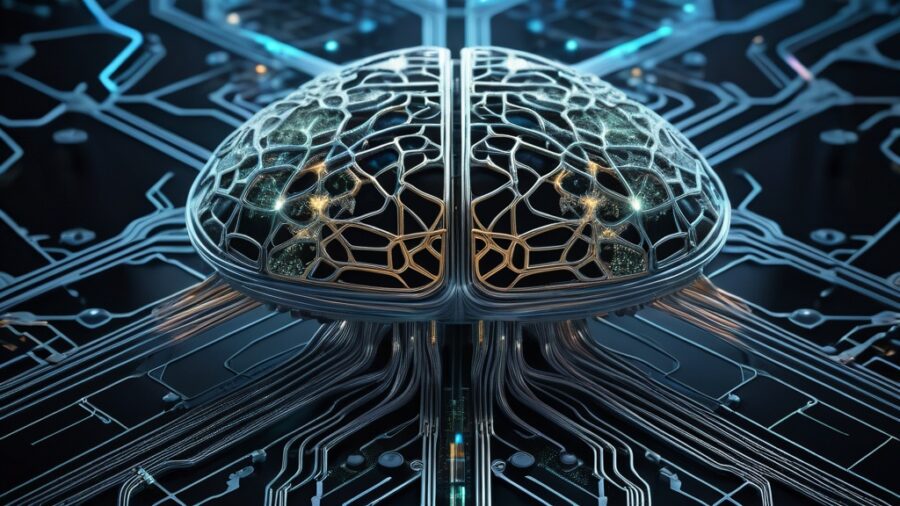
Introduction to Neuromorphic Chips and Brain Computing
In the rapidly evolving landscape of technology, neuromorphic chips have emerged as a groundbreaking innovation that mimics the human brain’s architecture. These chips are increasingly being recognized for their potential in brain computing, an area that promises to revolutionize how machines process information. As we delve into the world of neuromorphic chips, we will explore their unique functionalities, how they differ from traditional computing methods, and the implications for the future of artificial intelligence.
The concept of brain computing has captivated researchers and technologists alike, as it seeks to harness the power of the human brain to enhance machine learning and cognitive functions. Neuromorphic chips serve as the hardware foundation for this ambitious vision, enabling more efficient and sophisticated processing capabilities. In this article, we will uncover the intricate details of neuromorphic chips, their role in brain computing, and their applications across various sectors.
Furthermore, we will address the challenges and limitations associated with neuromorphic technology, as well as the competitive landscape between neuromorphic and traditional computing systems. By understanding these aspects, we can appreciate the transformative potential of neuromorphic chips and their future in brain computing.
Understanding Neuromorphic Chips
What are Neuromorphic Chips?
Neuromorphic chips are specialized hardware designed to replicate the neural structures and functionalities of the human brain. Unlike conventional processors, which operate on a linear basis, neuromorphic chips utilize a parallel processing approach that mirrors the brain’s interconnected neurons. This architecture allows for greater efficiency in handling complex tasks, particularly those involving sensory data processing and pattern recognition.
One of the defining features of neuromorphic chips is their ability to process information in an event-driven manner. This means they only consume power when activated, significantly reducing energy consumption compared to traditional computing systems. As a result, neuromorphic chips are not only faster but also more energy-efficient, making them ideal for applications that require real-time processing.
Key Components of Neuromorphic Chips
The core components of neuromorphic chips include neurons, synapses, and spike-based communication. Neurons in these chips are designed to emulate the behavior of biological neurons, firing and transmitting signals based on input stimuli. Synapses serve as the connections between neurons, adjusting their strength based on learning and experience, akin to synaptic plasticity in the human brain.
Spike-based communication is a crucial element of neuromorphic chips, where information is transmitted in the form of discrete spikes rather than continuous signals. This method closely resembles the way biological neurons communicate, allowing for more efficient data processing and storage.
The Role of Neuromorphic Chips in Brain Computing
Enhancing Machine Learning Capabilities
Neuromorphic chips play a pivotal role in enhancing machine learning capabilities by providing a platform that mimics human cognitive processes. Their architecture supports various learning algorithms, including unsupervised and reinforcement learning. This enables machines to learn from experience, adapt to new information, and make decisions similar to human thinking.
For example, neuromorphic chips can be utilized in autonomous systems, such as self-driving cars, where rapid decision-making is crucial. By processing sensory data in real time and learning from previous experiences, these chips can dramatically improve the safety and efficiency of autonomous vehicles.
Facilitating Real-Time Data Processing
Another significant advantage of neuromorphic chips in brain computing is their ability to facilitate real-time data processing. In applications such as robotics and Internet of Things (IoT) devices, rapid analysis of incoming data is essential for optimal performance. Neuromorphic chips can handle vast amounts of sensory data from multiple sources simultaneously, allowing for immediate responses and actions.
For instance, in a smart home scenario, neuromorphic chips can process data from security cameras, motion sensors, and environmental controls in real time, enhancing the overall functionality of the system. This capability not only improves user experience but also increases energy efficiency by optimizing resource consumption.
Comparative Analysis: Neuromorphic Chips vs Traditional Computing
Performance Metrics
When comparing neuromorphic chips to traditional computing systems, several performance metrics stand out. Neuromorphic chips excel in tasks that require parallel processing and rapid data analysis. In contrast, traditional processors tend to follow a sequential processing model, which can create bottlenecks in applications that demand high-speed computations.
For example, a study conducted by researchers at IBM found that neuromorphic chips could process data 10 to 100 times faster than conventional CPUs for specific tasks, such as image recognition and sensory processing. This remarkable speed is attributed to the event-driven nature of neuromorphic chips, which allows them to operate more efficiently under heavy workloads.
Energy Consumption
Another critical area of comparison is energy consumption. Traditional computing systems often require substantial power to maintain their performance levels, leading to increased operational costs and environmental impact. In contrast, neuromorphic chips are designed to be highly energy-efficient, consuming power only when processing information.
For instance, a neuromorphic chip can perform complex tasks with a mere fraction of the energy required by a traditional CPU. This efficiency is particularly advantageous in mobile devices and remote sensors, where battery life and energy conservation are paramount.
| Performance Metric | Neuromorphic Chips | Traditional Computing |
|---|---|---|
| Processing Speed | 10-100x faster for specific tasks | Standard sequential processing |
| Energy Efficiency | Event-driven, low power consumption | High power consumption |
| Data Handling | Parallel processing | Sequential processing |
Applications of Neuromorphic Chips in Real World Scenarios
Healthcare Innovations
In the healthcare sector, neuromorphic chips are paving the way for significant advancements in medical diagnostics and treatment. By utilizing their ability to process complex sensory data quickly, these chips can assist in developing more accurate diagnostic tools. For example, they can analyze medical images, such as MRIs and CT scans, to identify anomalies with remarkable precision.
Additionally, neuromorphic chips can enhance patient monitoring systems. With the capability to process real-time data from wearable devices, these chips can track vital signs and detect irregularities, alerting healthcare providers promptly. This proactive approach can lead to better patient outcomes and more efficient healthcare delivery.
Smart Cities and Infrastructure
The concept of smart cities is rapidly gaining traction, and neuromorphic chips play a vital role in this evolution. These chips can facilitate the integration of various urban technologies, such as traffic management systems, public safety measures, and energy-efficient utilities. By processing data from multiple sources, neuromorphic chips can optimize resource allocation and improve city management.
For instance, in a smart traffic management system, neuromorphic chips can analyze real-time traffic data to adjust signal timings dynamically, reducing congestion and improving overall traffic flow. This capability not only enhances urban mobility but also contributes to lower emissions and energy consumption.
Challenges and Limitations of Neuromorphic Computing
Technical Challenges
Despite their potential, neuromorphic chips face several technical challenges that must be addressed for widespread adoption. One significant hurdle is the complexity of designing and fabricating neuromorphic hardware. The intricate architecture that mimics the brain’s neural networks requires advanced manufacturing techniques, which can be costly and time-consuming.
Moreover, programming neuromorphic chips poses another challenge. Traditional programming models may not be suitable for neuromorphic systems, necessitating the development of new software frameworks and algorithms that can leverage the unique capabilities of these chips.
Scalability Issues
Scalability is another critical concern for neuromorphic computing. While current prototypes demonstrate impressive capabilities, scaling these systems for large-scale applications remains a challenge. Ensuring that neuromorphic chips can operate effectively in diverse environments and handle vast amounts of data is essential for their practical implementation.
For instance, deploying neuromorphic chips in large data centers or cloud computing infrastructures may require significant advancements in chip design and energy management to ensure efficiency and reliability.
The Future of Neuromorphic Chips in Brain Computing
Advancements in Research and Development
The future of neuromorphic chips in brain computing looks promising, with ongoing research and development efforts aimed at overcoming existing challenges. Researchers are exploring innovative materials and manufacturing techniques to create more efficient and powerful neuromorphic chips. For example, advancements in memristor technology, which allows for non-volatile memory storage, are being integrated into neuromorphic designs to enhance their capabilities.
Furthermore, interdisciplinary collaboration between neuroscientists, computer scientists, and engineers is fostering the development of new algorithms and architectures that can better leverage the strengths of neuromorphic computing. This synergy will likely accelerate the progress of neuromorphic technology and its applications.
Potential Impact on Industries
As neuromorphic chips continue to evolve, their impact on various industries is expected to grow significantly. In sectors such as autonomous vehicles, healthcare, and smart cities, the integration of neuromorphic chips will enhance the efficiency and effectiveness of systems, leading to improved outcomes.
For instance, the automotive industry could see advancements in vehicle safety and navigation systems, while the healthcare sector may benefit from more accurate diagnostic tools and personalized treatment options. Additionally, smart cities could become more efficient and sustainable through the optimized use of resources and data-driven decision-making.
Conclusion: Key Takeaways on Neuromorphic Chips and Brain Computing
Neuromorphic chips represent a revolutionary advancement in the field of computing, enabling machines to process information in ways that closely resemble human cognition. By leveraging their unique architecture, these chips enhance machine learning capabilities, facilitate real-time data processing, and offer significant advantages over traditional computing systems.
As we move forward, the continued research and development of neuromorphic chips will play a critical role in shaping the future of brain computing. With applications ranging from healthcare to smart cities, the potential for neuromorphic technology is vast and promises to transform industries and improve lives.
Frequently Asked Questions about Neuromorphic Chips
What are the main advantages of neuromorphic chips?
The primary advantages of neuromorphic chips include their high processing speeds, energy efficiency, and ability to handle complex tasks through parallel processing. These features make them ideal for applications requiring real-time data analysis and decision-making.
How do neuromorphic chips differ from traditional CPUs?
Neuromorphic chips differ from traditional CPUs in their architecture and processing methods. While traditional CPUs rely on sequential processing, neuromorphic chips utilize a parallel, event-driven approach that mimics the human brain’s neural networks. This allows for faster and more efficient data handling.
In which industries are neuromorphic chips being applied?
Neuromorphic chips are being applied across various industries, including healthcare, automotive, robotics, and smart cities. Their ability to process sensory data in real time makes them valuable in enhancing diagnostics, improving vehicle safety, and optimizing urban management.
What challenges do neuromorphic chips face?
Neuromorphic chips face challenges related to technical complexity, programming, and scalability. Designing and fabricating neuromorphic hardware can be costly, and traditional programming models may not be suitable. Additionally, ensuring scalability for large-scale applications remains a concern.
What does the future hold for neuromorphic computing?
The future of neuromorphic computing is promising, with ongoing research focused on overcoming current challenges and expanding applications. Advancements in materials, manufacturing techniques, and interdisciplinary collaboration will likely accelerate the development and adoption of neuromorphic chips.
Recap of Key Points on Neuromorphic Chips and Their Applications
- Neuromorphic chips mimic the human brain’s architecture for efficient processing.
- They excel in machine learning and real-time data processing.
- Compared to traditional computing, they offer superior speed and energy efficiency.
- Applications span healthcare, smart cities, and autonomous vehicles.
- Challenges include technical complexity and scalability issues.
- The future of neuromorphic chips looks promising with ongoing research and development.
- Interdisciplinary collaboration is key to advancing neuromorphic technology.
- Neuromorphic computing has the potential to transform various industries.