
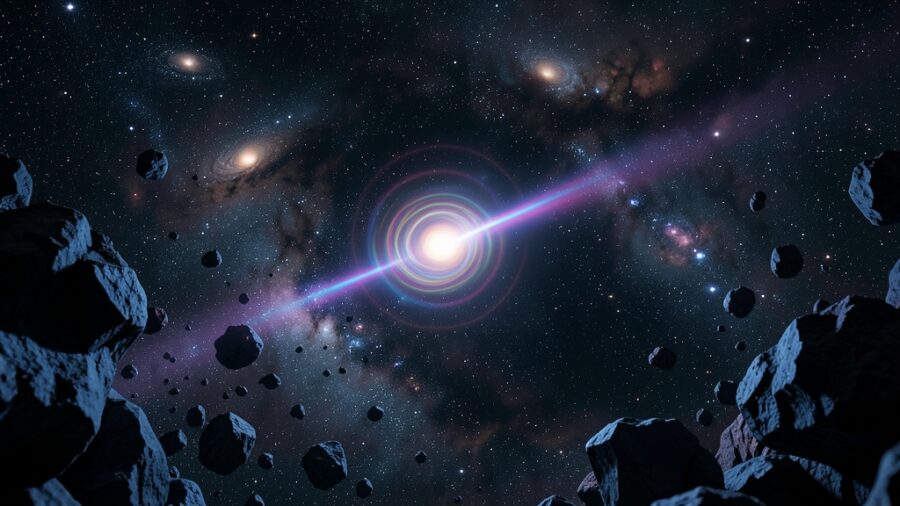
Unraveling the Fast Radio Bursts Mystery
In recent years, the astronomical community has been captivated by the fast radio bursts mystery, a phenomenon that has intrigued scientists and enthusiasts alike. Fast radio bursts, or FRBs, are intense bursts of radio waves that last only milliseconds but can emit as much energy as the Sun does in an entire day. This compelling enigma raises numerous questions about their origins, nature, and potential implications for our understanding of the universe.
In this article, we will explore the fundamental aspects of fast radio bursts, delving into what they are, the theories that attempt to explain them, and significant discoveries that have shaped our current understanding. We will also examine the critical role of telescopes in detecting these elusive signals and discuss future research directions that may finally solve the fast radio bursts mystery.
By the end of this exploration, readers will gain insight into the complexities surrounding fast radio bursts and their potential implications for astrophysics and cosmology. Join us as we embark on this fascinating journey through the cosmos, unraveling one of the most captivating mysteries of modern astronomy.
What are Fast Radio Bursts?
Fast radio bursts (FRBs) are high-energy astrophysical phenomena characterized by their brief yet powerful emissions of radio waves. Typically lasting only a few milliseconds, these bursts can be detected from billions of light-years away, providing a unique glimpse into the distant universe. The first FRB was discovered in 2007, and since then, more than 100 have been identified, with varying characteristics and behaviors.
One of the most intriguing aspects of FRBs is their ability to produce enormous amounts of energy in such a short time frame. Some bursts have been observed to release as much energy in a millisecond as the Sun emits in an entire day. This remarkable energy output raises questions about the underlying mechanisms driving these phenomena and challenges our understanding of astrophysical processes.
Characteristics of Fast Radio Bursts
FRBs exhibit several distinctive characteristics that set them apart from other celestial phenomena. These include:
- Duration: FRBs typically last from a few microseconds to a few milliseconds.
- Dispersion: The radio waves from FRBs show varying degrees of dispersion, indicating they have traveled through different densities of plasma in space.
- Repeatability: While many FRBs are one-off events, some have been observed to repeat, raising questions about their origins.
Where Do Fast Radio Bursts Originate?
The precise locations of FRBs remain largely unknown, although they have been detected in diverse environments, including galaxies and regions of space with varying physical conditions. The localization of these bursts has been a key area of research, with astronomers using advanced telescopes to pinpoint their origins. In 2016, researchers successfully identified the host galaxy of an FRB, providing valuable clues about the potential mechanisms involved in their generation.
Theories Behind Fast Radio Bursts
Numerous theories have been proposed to explain the origins and mechanisms of fast radio bursts. These theories range from astrophysical to exotic, each offering unique insights into the nature of these mysterious signals.
Astrophysical Events
Many scientists believe that FRBs are associated with catastrophic astrophysical events. Some of the leading theories include:
- Neutron Stars: One of the most widely accepted theories posits that FRBs are generated by rapidly rotating neutron stars, particularly magnetars. The intense magnetic fields of these stars could lead to the release of enormous amounts of energy in the form of radio waves.
- Black Hole Mergers: Another possibility is that FRBs are the result of black hole mergers, where the collision of two black holes generates powerful bursts of energy.
Exotic Theories
While astrophysical events provide plausible explanations for FRBs, some researchers propose more exotic theories. These include:
- Alien Technology: Although highly speculative, some theories suggest that FRBs could be signals from extraterrestrial civilizations, potentially indicating advanced technology.
- Cosmic Strings: Another intriguing idea involves cosmic strings, hypothetical one-dimensional defects in spacetime that could produce FRBs through interactions with other cosmic phenomena.
Significant Discoveries and Milestones
The journey to understand fast radio bursts has been marked by several key discoveries and milestones that have advanced our knowledge of these phenomena. From the initial discovery of FRBs to the latest advancements in detection technology, each step has contributed to unraveling the fast radio bursts mystery.
The First Detection of an FRB
The first fast radio burst was detected in 2007 by a team of astronomers led by Duncan Lorimer. This initial discovery, known as the Lorimer burst, opened the floodgates for further research into these enigmatic signals. Subsequent detections have revealed a plethora of FRBs, each contributing unique data to the evolving narrative surrounding these bursts.
Localization of FRBs
One of the significant advancements in FRB research occurred in 2016 when astronomers successfully localized an FRB to its host galaxy, a major breakthrough in understanding the origins of these signals. This localization allowed researchers to study the surrounding environment and gain insights into the physical conditions that may contribute to the generation of FRBs.
The Role of Telescopes in Detecting Fast Radio Bursts
The detection and study of fast radio bursts rely heavily on advanced telescopes equipped with cutting-edge technology. These instruments play crucial roles in capturing the fleeting signals and enabling astronomers to analyze their properties.
Radio Telescopes
Radio telescopes are the primary tools used to detect FRBs. Instruments such as the Parkes Observatory in Australia and the Arecibo Observatory in Puerto Rico have been pivotal in discovering and studying FRBs. These telescopes utilize large dish antennas to capture radio waves from distant cosmic sources, allowing researchers to analyze their characteristics and origins.
Next-Generation Telescopes
The future of FRB research is promising, with the development of next-generation telescopes that aim to enhance our ability to detect and study these phenomena. Projects like the Square Kilometre Array (SKA) will significantly increase sensitivity and resolution, enabling astronomers to observe FRBs with unprecedented detail and frequency.
Future Research Directions in Fast Radio Bursts
The exploration of fast radio bursts is still in its infancy, and numerous research directions hold promise for unraveling their mysteries. As technology advances and our understanding deepens, several key areas of focus are emerging.
Understanding Repeating FRBs
One of the most intriguing aspects of FRBs is the existence of repeating bursts. Ongoing research aims to understand the mechanisms that lead to repetition and the potential implications for the nature of these signals. By studying repeating FRBs in detail, scientists may uncover patterns that could shed light on their origins.
Connection to Other Cosmic Phenomena
Another critical area of research involves exploring the connections between FRBs and other cosmic phenomena, such as gamma-ray bursts and supernovae. Understanding how these events interrelate could provide valuable insights into the underlying processes driving fast radio bursts and enhance our overall comprehension of the universe.
Conclusion
The fast radio bursts mystery continues to captivate astronomers and enthusiasts alike, offering a tantalizing glimpse into the complexities of the universe. Through a combination of advanced technology, international collaboration, and innovative theories, researchers are gradually piecing together the puzzle of these enigmatic signals.
As we look to the future, the study of fast radio bursts promises to reveal new insights into astrophysics and cosmology, potentially reshaping our understanding of the universe. With each discovery, we move closer to unraveling the fast radio bursts mystery and uncovering the secrets of the cosmos.
Frequently Asked Questions about Fast Radio Bursts
What are fast radio bursts (FRBs)?
Fast radio bursts (FRBs) are brief, intense bursts of radio waves from distant galaxies. Typically lasting only milliseconds, they can emit vast amounts of energy, making them one of the most intriguing phenomena in astrophysics.
What causes fast radio bursts?
The exact cause of fast radio bursts is still unknown, but several theories exist. These include astrophysical events such as neutron star collisions, black hole mergers, and even exotic theories involving cosmic strings or extraterrestrial technology.
How are fast radio bursts detected?
FRBs are detected using advanced radio telescopes that capture the fleeting signals. Instruments such as the Parkes Observatory and next-generation facilities like the Square Kilometre Array are crucial for identifying these phenomena.
Are all fast radio bursts one-time events?
No, while many FRBs are one-off events, some have been observed to repeat. This repetition raises questions about the underlying mechanisms and provides opportunities for more detailed studies.
What is the significance of fast radio bursts?
Fast radio bursts are significant because they challenge our understanding of astrophysics and cosmology. Studying them can provide insights into the nature of the universe, the behavior of extreme astronomical phenomena, and potentially even the existence of extraterrestrial intelligence.
Recap of Key Points
- Fast radio bursts are brief, powerful emissions of radio waves from distant galaxies.
- They can emit as much energy in a millisecond as the Sun does in a day.
- Astrophysical theories suggest they may originate from neutron stars or black hole mergers.
- Significant milestones include the first detection of an FRB in 2007 and successful localization in 2016.
- Advanced radio telescopes are essential for detecting and studying FRBs.
- Future research will focus on understanding repeating FRBs and their connections to other cosmic phenomena.
This content is informative and does not replace medical or psychological evaluation or treatment.