
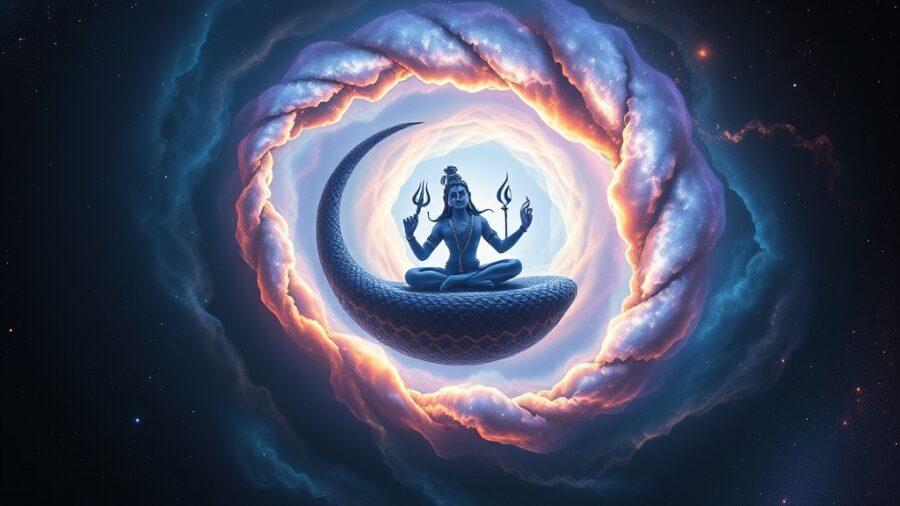
Introduction to Hindu Mythology and Cosmic Cycles
Hindu mythology is a rich tapestry woven with complex narratives, deities, and cosmic principles. At the heart of this mythology lies the fascinating concept of cosmic cycles, which provides a framework for understanding the universe’s cyclical nature. This article will explore the intricate details of Hindu cosmology, particularly focusing on cosmic cycles and their significance.
In Hinduism, time is not linear; instead, it is perceived as a series of cyclic periods that repeat indefinitely. These cycles are divided into different phases, each representing unique characteristics and events. By delving into these cycles, we can gain insight into how ancient texts interpret the cosmos and human existence.
Throughout this article, we will examine the concept of Yugas, the roles of various deities in these cycles, and how Hindu cosmology compares with other mythological frameworks. Furthermore, we will discuss the relevance of these cosmic cycles in today’s world, providing a comprehensive understanding of Hindu mythology’s enduring legacy.
Understanding Time in Hindu Cosmology
The Nature of Time
In Hindu cosmology, time is viewed as a vast, infinite entity that is divided into Yugas. Each Yuga has its own distinct qualities and characteristics, signifying different stages of moral and spiritual evolution. The four primary Yugas are:
- Krita Yuga (also known as Satya Yuga): The age of truth and righteousness, lasting approximately 1,728,000 years.
- Treta Yuga: The age of virtue, where righteousness decreases, lasting about 1,296,000 years.
- Dvapara Yuga: The age of duality, where the balance between good and evil is more pronounced, lasting roughly 864,000 years.
- Kali Yuga: The current age of darkness and ignorance, expected to last for 432,000 years.
This cyclical understanding of time emphasizes that humanity experiences various phases of spiritual awakening and decline. Each Yuga serves as a reminder of the moral and ethical responsibilities that individuals carry throughout their existence.
The Cosmic Clock
The concept of the cosmic clock is essential in Hindu cosmology. It illustrates the eternal cycles of creation (Srishti), preservation (Sthiti), and dissolution (Pralaya). This cyclical nature of time can be visualized as a wheel, turning endlessly, where each Yuga represents a segment of the wheel.
The cosmic clock also highlights the interconnectedness of all beings and the universe itself. As time progresses through the Yugas, the roles of deities and celestial beings become more prominent, guiding humanity through various challenges and spiritual lessons.
The Concept of Yugas
Characteristics of Each Yuga
Each Yuga presents unique characteristics that define the spiritual climate of that era. For instance, in the Krita Yuga, righteousness prevails, and individuals live in harmony with the universe. It is considered the golden age of humanity, where moral values are at their peak.
In contrast, the Kali Yuga is marked by a decline in virtue, with increased conflict and ignorance. This Yuga is often associated with struggles and moral degradation, yet it also holds the potential for spiritual awakening as individuals seek redemption and enlightenment amidst chaos.
Understanding these characteristics provides a deeper appreciation for the cyclical nature of existence in Hindu thought. Each Yuga serves a purpose, and the teachings of the past continue to resonate in contemporary spiritual practices.
The Transition Between Yugas
The transitions between Yugas are significant events in Hindu cosmology, often marked by cosmic disturbances and divine interventions. These transitions indicate shifts in consciousness and societal values. For example, the end of the Dvapara Yuga and the onset of the Kali Yuga is said to be heralded by the avatar of Krishna, who plays a crucial role in guiding humanity through these tumultuous changes.
Moreover, the transitions emphasize the importance of adaptability and growth within the human experience. Each era presents unique challenges that require individuals to evolve spiritually and ethically.
The Role of Deities in Cosmic Cycles
Major Deities and Their Significance
In Hindu mythology, deities play a pivotal role in the cosmic cycles, acting as guardians and guides for humanity. Major deities such as Brahma, Vishnu, and Shiva each represent different aspects of the cosmic order.
Brahma is often seen as the creator, initiating the cycles of existence, while Vishnu preserves and protects the universe during each Yuga. Shiva, on the other hand, is associated with dissolution, symbolizing the end of one cycle and the beginning of another. This triad of deities embodies the cyclical nature of creation, preservation, and destruction.
Avatars and Their Influence
One of the most fascinating aspects of Hindu mythology is the concept of avatars, incarnations of deities that descend to Earth during critical times. For instance, Krishna and Rama are two prominent avatars of Vishnu, taking form to restore dharma (cosmic order) during times of moral decline.
Their stories serve as allegories for the struggles faced by humanity and provide guidance on overcoming challenges. By examining the narratives of these avatars, we can better understand the intricate connections between divine intervention and cosmic cycles.
Comparative Analysis with Other Mythologies
Hindu Cosmology vs. Western Mythologies
When comparing Hindu cosmology to Western mythologies, significant differences in the perception of time and cosmic cycles emerge. In contrast to the linear timeline often found in Western narratives, Hinduism embraces a cyclical view of existence. For instance, in Christianity, the concept of an apocalypse signifies a definitive end, while Hinduism sees dissolution as a precursor to rebirth.
This cyclical nature aligns more closely with ancient Greek philosophies, which also explored the idea of eternal recurrence. However, Hindu mythology’s intricate system of Yugas provides a more structured framework for understanding the evolution of consciousness over vast periods.
Influences from Other Cultures
Hindu mythology has also been influenced by neighboring cultures and their cosmologies. For example, the ancient Persian concept of Zoroastrianism introduced ideas of duality and cosmic struggle, which resonate with the Hindu view of good versus evil across the Yugas.
Additionally, elements from Buddhist cosmology, such as cycles of samsara, have intersected with Hindu beliefs, further enriching the understanding of cosmic cycles. This cross-cultural exchange illustrates the dynamic nature of mythology and its ability to adapt and evolve.
The Significance of Cosmic Cycles in Modern Context
Lessons for Contemporary Society
The teachings of Hindu mythology, especially regarding cosmic cycles, offer profound lessons for contemporary society. In an era characterized by rapid change and uncertainty, understanding the cyclical nature of existence can provide comfort and guidance. Recognizing that challenges are transient and will eventually lead to renewal can inspire resilience and hope.
Moreover, the emphasis on personal responsibility during each Yuga encourages individuals to engage in actions that promote harmony and balance. By aligning with the principles of dharma, people can contribute to the positive evolution of society, echoing the lessons of the past.
Spiritual Practices and Cosmic Awareness
Many spiritual practices in Hinduism, such as yoga and meditation, are designed to cultivate awareness of the cosmic cycles. These practices encourage individuals to reflect on their place within the universe and their connection to the divine.
As modern practitioners engage with these ancient teachings, they can find a sense of belonging and purpose, fostering a deeper understanding of their spiritual journey. This awareness can lead to a more profound appreciation for the interconnectedness of all life and the cycles that govern existence.
Conclusion
In conclusion, the exploration of Hindu mythology cosmic cycles reveals a complex and profound understanding of time, existence, and the divine. By examining the Yugas, the roles of deities, and the significance of these cycles, we gain insight into the rich tapestry of Hindu cosmology. The lessons derived from these teachings remain relevant in today’s world, offering guidance and inspiration for personal and collective growth.
As we continue to navigate the challenges of modern life, the wisdom of cosmic cycles reminds us of the importance of resilience, responsibility, and spiritual awareness. Embracing these principles can lead to a more harmonious existence, in alignment with the eternal rhythms of the universe.
Frequently Asked Questions
What are the four Yugas in Hindu mythology?
The four Yugas are Krita Yuga (or Satya Yuga), Treta Yuga, Dvapara Yuga, and Kali Yuga. Each Yuga represents different stages of moral and spiritual evolution, with distinct characteristics and durations.
How long does each Yuga last?
Krita Yuga lasts approximately 1,728,000 years, Treta Yuga about 1,296,000 years, Dvapara Yuga roughly 864,000 years, and Kali Yuga is expected to last 432,000 years.
What is the significance of deities in cosmic cycles?
Deities in Hindu mythology, such as Brahma, Vishnu, and Shiva, represent different aspects of the cosmic order. They guide humanity through the challenges of each Yuga and embody the principles of creation, preservation, and destruction.
How do Hindu cosmic cycles compare to Western mythologies?
Hindu cosmic cycles embrace a cyclical view of time, contrasting with the linear perspective often found in Western mythologies. While Western narratives focus on definitive endings, Hinduism emphasizes renewal and rebirth through its cyclical nature.
What lessons can we learn from Hindu mythology’s cosmic cycles?
The lessons from Hindu mythology regarding cosmic cycles emphasize resilience, personal responsibility, and the importance of aligning with dharma. These teachings can inspire individuals to navigate modern challenges with hope and awareness.
- Hindu mythology presents a cyclical view of time through the concept of Yugas.
- The four Yugas represent distinct stages of moral and spiritual evolution.
- Major deities play crucial roles in guiding humanity through cosmic cycles.
- Hindu cosmology contrasts with Western mythologies, which often adopt a linear perspective.
- The teachings of cosmic cycles remain relevant, offering insights for contemporary society.
- Spiritual practices in Hinduism cultivate awareness of cosmic cycles and interconnectedness.
- Understanding these cycles can inspire resilience and personal growth.
- Hindu mythology’s rich narratives reflect the complexity of existence and the divine.