
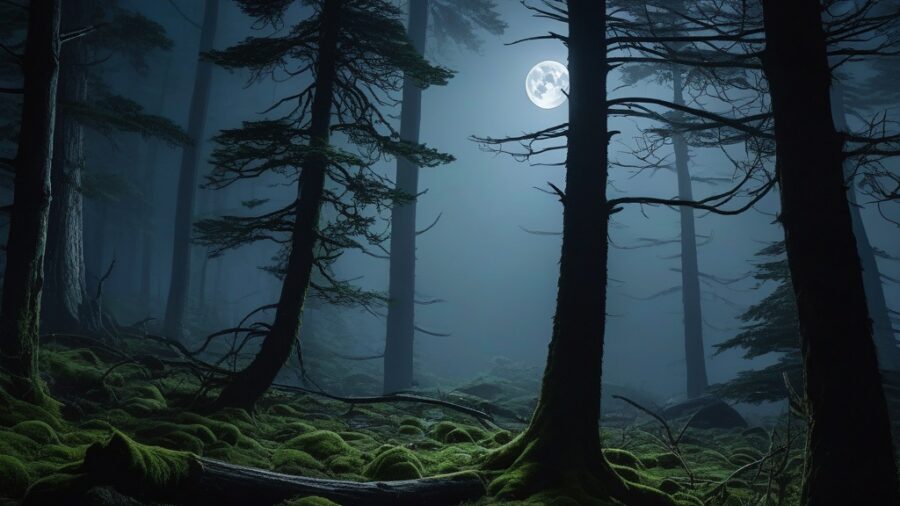
Introduction to Werewolf Legends and Full Moon
The captivating world of werewolf legends has enchanted audiences for centuries, often intertwined with the mystique of the full moon. These legends, steeped in folklore and mythology, reveal a complex narrative that delves into human fears, cultural interpretations, and the natural world. This article will explore the origins, cultural significance, and modern adaptations of werewolf lore while shedding light on the role of the full moon in these tales.
From ancient civilizations to contemporary media, the werewolf legend has evolved, yet its core themes remain relevant. The full moon serves as a powerful symbol in these stories, believed to trigger transformations and invoke primal instincts. As we navigate through various interpretations of werewolves, we will uncover the historical roots and the science behind these fascinating phenomena.
Readers will gain insights into how different cultures perceive werewolves, the scientific explanations behind the full moon’s effects, and the ongoing popularity of these myths in modern entertainment. By the end of this article, you will have a comprehensive understanding of werewolf legends and their enduring relationship with the full moon.
Historical Roots of Werewolf Legends
Ancient Origins
The origins of werewolf legends can be traced back to ancient civilizations, where stories of shape-shifting beings were prevalent. In Mesopotamia, approximately 4000 years ago, the epic of Gilgamesh featured a character who could transform into a wolf. Similarly, in ancient Greece, the tale of Lycaon, who was turned into a wolf by Zeus, signifies one of the earliest documented instances of werewolf mythology.
These early narratives often reflected societal fears and the struggle between civilization and nature. The werewolf became a symbol of the primal instincts that humans grapple with, serving as a cautionary tale about the consequences of succumbing to one’s baser urges.
Medieval Europe and the Witch Hunts
During the medieval period, werewolf legends gained significant traction in Europe, particularly during the witch hunts of the 15th to 18th centuries. Many individuals accused of witchcraft were believed to possess the ability to transform into wolves. Trials often relied on dubious evidence, leading to numerous executions and reinforcing the link between werewolves and evil.
The infamous werewolf trials, such as those in France and Germany, highlighted the societal paranoia surrounding the supernatural. These events not only contributed to the mythos of werewolves but also emphasized the fear of the unknown that characterized the era.
| Key Period | Significant Events | Cultural Impact |
|---|---|---|
| Ancient Civilizations | Epic of Gilgamesh, Greek Mythology | Foundation of werewolf lore, exploration of human nature |
| Medieval Europe | Witch Hunts, Werewolf Trials | Reinforced fears, societal paranoia, and folklore |
Cultural Interpretations of Werewolves
Werewolves in Folklore
Across various cultures, the figure of the werewolf has been interpreted in diverse ways. In Scandinavian folklore, the vargkors or “wolf-men” were thought to be warriors who could take on the form of wolves in battle. This transformation was seen as a way to invoke strength and ferocity, showcasing how werewolves could symbolize bravery and power.
In contrast, Native American legends often depict werewolves as malevolent spirits. The skinwalker legend, for example, tells of a person who can transform into an animal, using this ability for harm. These varying interpretations reflect cultural beliefs about the natural world, morality, and the human condition.
Modern Representations in Media
Today’s portrayal of werewolves in movies, literature, and television often draws from historical roots while incorporating contemporary themes. Popular series like “Teen Wolf” and films such as “The Twilight Saga” have reimagined the werewolf archetype, portraying them as complex characters straddling the line between humanity and monstrosity.
These modern adaptations challenge traditional perceptions, showcasing the struggles of werewolves as they navigate their dual identities. This evolution of the werewolf in popular culture reflects ongoing societal issues, such as identity, acceptance, and the battle against inner demons.
The Science Behind the Full Moon and Transformation
Scientific Studies on Lunar Effects
The belief that the full moon influences human behavior dates back centuries. Numerous studies have explored the correlation between lunar phases and various phenomena, including sleep patterns, crime rates, and even psychiatric admissions. For instance, research published in 1985 suggested an increase in violent crimes during full moons, although later studies have yielded mixed results.
Despite ongoing debates, many scientists remain skeptical of a direct link between the full moon and human behavior. Factors such as cultural beliefs and psychological expectations may contribute to the perception of heightened activity during this lunar phase.
The Myth of Transformation
The notion of transformation during the full moon is deeply embedded in werewolf lore. In folklore, it is often said that the full moon triggers the metamorphosis into a wolf, aligning with the lunar cycle’s symbolism of rebirth and change. This belief may stem from the moon’s powerful gravitational effects, which influence tides and can even affect biological rhythms in humans and animals.
While the concept of physical transformation remains firmly in the realm of mythology, the psychological aspect of transformation is intriguing. Many individuals report feeling more energetic or restless during a full moon, linking their moods to this celestial event.
| Study | Findings | Comments |
|---|---|---|
| 1985 Study on Crime Rates | Increased violent crimes during full moons | Later studies showed inconsistent results |
| Psychological Effects | Heightened energy and restlessness reported | Link to cultural beliefs and expectations |
Modern Adaptations of Werewolf Myths
Literature and Film
Contemporary literature and film have revitalized the werewolf myth, presenting it in novel ways that resonate with modern audiences. Authors like Neil Gaiman and Stephen King have incorporated werewolves into their narratives, often using the creature as a metaphor for internal conflict.
Films such as “Underworld” and “An American Werewolf in London” showcase the dual nature of werewolves, exploring themes of identity, isolation, and the struggle between humanity and bestial instincts. These adaptations not only entertain but also invite viewers to reflect on their own nature and societal norms.
Video Games and Interactive Media
Werewolf legends have also permeated video games, allowing players to explore the narrative from a first-person perspective. Games like “The Wolf Among Us” and the “Wolfenstein” series have integrated werewolf themes, offering players immersive experiences that challenge them to navigate moral choices and consequences.
Through interactive storytelling, players can engage with the complexities of werewolf mythology in a way that is both entertaining and thought-provoking. This modern medium has expanded the reach of werewolf legends, making them accessible to a new generation of enthusiasts.
The Role of the Full Moon in Werewolf Lore
Symbolism and Cultural Significance
The full moon serves as a powerful symbol within werewolf lore, representing the duality of human nature. It embodies the tension between civilization and primal instincts, inviting contemplation on the darker aspects of humanity. Many cultures view the full moon as a time of heightened emotion, reflection, and transformation, aligning perfectly with the werewolf’s narrative.
In many folktales, the full moon is portrayed as a catalyst for change, triggering the transformation from human to wolf. This transformation often symbolizes a loss of control and a surrender to the wild, echoing humanity’s struggle against its own nature.
Folkloric Practices and Beliefs
Throughout history, various cultures have developed rituals and practices surrounding the full moon and werewolves. In some traditions, full moon nights were considered auspicious for magical activities, while others warned against venturing out during this lunar phase due to the potential danger of encountering werewolves.
These beliefs not only reflect the fears associated with the unknown but also highlight the full moon’s role as a significant time for spiritual and transformative experiences. Many still partake in lunar rituals today, emphasizing the enduring impact of these ancient beliefs.
Conclusion
Werewolf legends and the full moon are deeply interconnected, revealing profound insights into human nature and cultural beliefs. From their historical roots in ancient civilizations to modern adaptations in literature and media, werewolves continue to captivate and intrigue us. The full moon serves as a potent symbol of transformation, reflecting the tension between our civilized selves and primal instincts.
As we navigate the complexities of these myths, we gain a better understanding of how they resonate with our own experiences and fears. The science behind the full moon’s effects may remain inconclusive, but the cultural significance of werewolves endures, inviting us to explore the darker recesses of our psyche.
FAQ about Werewolf Legends and Full Moon
1. What are the origins of werewolf legends?
Werewolf legends have ancient roots, with stories appearing in Mesopotamian and Greek mythology. These early narratives often reflected societal fears and the struggle between civilization and nature.
2. How does the full moon affect human behavior?
While many believe the full moon influences human behavior, scientific studies have produced mixed results. Factors such as cultural beliefs and expectations may play a significant role in perceived changes during lunar phases.
3. Are werewolves portrayed differently in various cultures?
Yes, werewolves are interpreted differently across cultures. For example, Scandinavian folklore often depicts them as noble warriors, while Native American legends may present them as malevolent spirits.
4. How have modern adaptations changed the perception of werewolves?
Modern adaptations in literature and film often present werewolves as complex characters, exploring themes of identity and internal conflict. This evolution challenges traditional perceptions and makes the legends more relatable.
5. What role does the full moon play in werewolf lore?
The full moon symbolizes transformation and the duality of human nature within werewolf lore. It represents the tension between civilization and primal instincts, inviting reflection on the darker aspects of humanity.
- Werewolf legends date back to ancient civilizations.
- The full moon is often associated with transformation.
- Cultural interpretations of werewolves vary globally.
- Modern adaptations explore complex themes of identity.
- The science behind lunar effects remains debated.
- Folkloric practices continue to be observed today.
- The relationship between werewolves and the full moon is deeply symbolic.
- These legends invite contemplation on human nature and societal fears.
This content is informative and does not substitute for medical or psychological evaluation or treatment.