
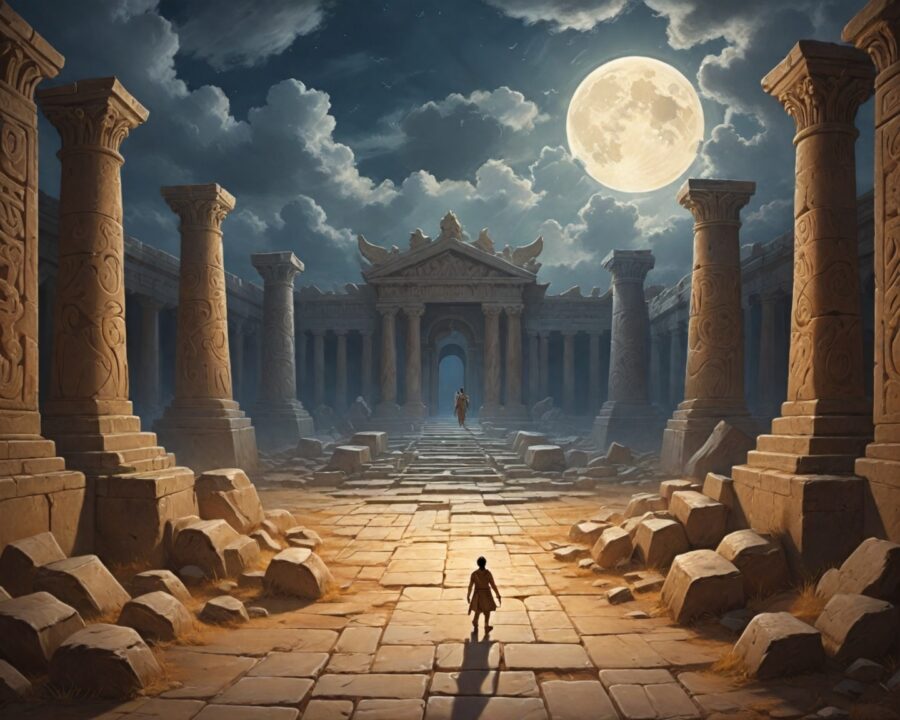
Introduction to the Myth of the Minotaur
The legend of the Minotaur and the labyrinth holds a special place in Greek mythology, captivating generations with its intriguing narrative and complex themes. At the core of this ancient tale lies a monstrous creature with the body of a man and the head of a bull, residing in an elaborate maze designed to contain it. This myth is not just a story about heroism and adventure; it is a tale woven with intricate symbolism that explores human nature, power dynamics, and the ceaseless quest for victory against seemingly insurmountable odds.
From the corridors of time echo the whispers of legends that have shaped the cultural subconscious of ancient Greece and beyond. The Minotaur myth, rich in drama and rife with tension, not only offers insight into the ancient Greek worldview but also serves as a mirror reflecting universal truths about leadership, courage, and the consequences of unchecked power. This article delves deep into the origins, significance, and enduring legacy of this timeless story, offering a comprehensive exploration of its themes and influence on modern culture.
The Origins of the Minotaur in Greek Mythology
The story of the Minotaur is deeply entrenched in Greek mythology, born from an intersection of divine punishment, human folly, and monstrous birth. According to legend, the Minotaur was the offspring of Pasiphaë, the wife of King Minos of Crete, and a magnificent bull sent by the sea god Poseidon. The union was not one of natural design but the product of divine retribution. King Minos had defied Poseidon by refusing to sacrifice the bull, an act that sparked mythological retribution leading to the birth of the Minotaur.
The creature itself symbolizes a complex amalgamation of divine wrath and natural aberration. Half-man and half-beast, the Minotaur represents the discord between human nature and untamed savagery. It serves as a reminder of the dangers inherent in defying the gods and the catastrophic outcomes of human hubris. The Minotaur’s existence is a narrative device illustrating the fatal flaws and perils associated with both divine intervention and human arrogance.
As myths were central to the communal and religious life of ancient Greeks, the story of the Minotaur provided moral lessons and explained natural phenomena within a mythical framework. The tale served as a cultural touchstone, encapsulating the fears, challenges, and beliefs of the time, while also reinforcing the idea of humans as pawns in the larger, capricious games of the gods.
The Role of King Minos and the Creation of the Labyrinth
King Minos of Crete, a central figure in the Minotaur myth, plays a critical role in the events that unfold. His reign was marked by wealth and power, but also by ambition and a desire to appease the gods—or so he pretended. His decision to defy Poseidon set off a chain of events that led to the creation of the labyrinth, an architectural marvel designed by the renowned artisan Daedalus.
The labyrinth itself was a testament to King Minos’s ingenuity and desperation. Constructed to confine the monstrous Minotaur, the labyrinth was a sprawling complex of intricate passages, seemingly with no beginning or end. It was intended not only as a prison for the Minotaur but also as a deterrent for those who would dare challenge or defy the king. The labyrinth symbolizes the complexity and chaos that arise from attempts to control the uncontrollable, reflecting both the physical and metaphorical entrapments of power and fear.
In commissioning the labyrinth, King Minos inadvertently created a symbol of human ambition and an inescapable trap of his own making. The maze acts as a metaphor for the intricate and often convoluted power dynamics within his own kingdom, representing the intricate paths to power and the daunting challenges that lie within.
The Story of Theseus and His Quest to Defeat the Minotaur
The tale of Theseus is one of heroism and bravery, entwined with the fate of the Minotaur. Theseus, the legendary hero of Athens, volunteered to enter the labyrinth and slay the beast as part of a tribute demanded by King Minos. This act was not just one of courage but a quest to liberate his city from the oppressive demands placed upon it by the Cretan king.
Theseus’s journey to the heart of the labyrinth is fraught with peril and uncertainty. Armed with little more than his wits and a ball of thread given to him by Ariadne, King Minos’s daughter, he faces the labyrinth’s winding corridors and the lurking Minotaur. The thread, a gift of wisdom and foresight, serves as both a metaphorical and literal guide, allowing Theseus to navigate the treacherous maze and find his way back after confronting the beast.
In the climactic confrontation, Theseus successfully defeats the Minotaur, emerging as a symbol of hope and resilience. His victory reverberates through Athens and beyond, positioning him as a hero of mythical proportions. The tale underscores the inherent power of human ingenuity and courage in overcoming formidable adversaries, as well as the importance of collaboration and trust in achieving success.
Symbolism and Themes in the Minotaur Myth
The myth of the Minotaur is rich with symbolism, addressing complex themes of power, control, and human nature. One prevalent theme is the struggle between civilization and barbarism, as evidenced by the conflict between Theseus and the half-human creature. The Minotaur itself embodies the primal, untamed aspects of humanity, while Theseus represents the triumph of order and reason.
The labyrinth, on the other hand, is a symbol of complexity and confusion, reflecting the intricate challenges of life and human ambition. It poses philosophical questions about control and chaos—whether the quest for control leads only to further entrapment and whether human ingenuity can truly overcome innate savagery.
Furthermore, the myth explores themes of sacrifice and redemption. The recurrent theme of human sacrifice, enacted through the Athenian tributes to the Minotaur, presents a grim reminder of the cyclical nature of retribution and the cost of power. Theseus’s journey signifies a break from this cycle, pointing to the possibility of redemption through courage and strategic thinking.
The Cultural and Historical Significance of the Labyrinth
The labyrinth’s significance extends beyond its role in containing the Minotaur, taking on broader cultural and historical meanings. In ancient times, mazes and labyrinths were often associated with sacred rituals and spiritual journeys, reflecting humanity’s perpetual quest for meaning and understanding.
Historically, the labyrinth has been interpreted as a metaphor for life’s journey, with its twists and turns reflecting the complexities of human existence. This concept resonates with the universal human experience of navigating personal challenges and seeking truth amid uncertainty. The labyrinth stands as a symbol of introspection and journeying, offering paths to self-discovery and enlightenment.
Moreover, the design and implementation of the labyrinth reveal much about architectural advancements and cultural values in ancient Crete. It highlights the sophistication and foresight of Cretan civilization, illustrating the intersection of art, culture, and myth in shaping our understanding of ancient societies.
How the Minotaur Myth Has Influenced Modern Literature and Art
The enduring appeal of the Minotaur myth has left an indelible mark on modern literature and art. Various adaptations and reinterpretations have kept the story alive, infusing contemporary narratives with its timeless themes and symbols. Writers and artists have drawn inspiration from the myth, exploring its deeper meanings and reimagining its elements in new and innovative ways.
In literature, the Minotaur often appears as a complex character, representing internal or societal conflicts. Renowned works of fiction have delved into the myth’s psychological dimensions, using the labyrinth as a metaphor for the human mind and the Minotaur as a symbol of inner demons. Authors like Jorge Luis Borges and Stephen King have woven the myth’s motifs into narratives that ponder existential questions and the nature of fear.
Artistic representations of the Minotaur and the labyrinth are equally profound, featuring in paintings, sculptures, and performances. Artists have used the myth to explore themes of identity, transformation, and the human condition. Pablo Picasso, for example, frequently depicted the Minotaur in his work, capturing the duality and complexity of the creature in bold, emotive forms.
Common Questions About the Minotaur and the Labyrinth
What is the origin of the Minotaur myth?
The Minotaur myth originates from Greek mythology, specifically involving King Minos of Crete, the god Poseidon, and the artisan Daedalus. It tells the story of a creature born from divine retribution and held within a labyrinth designed by Daedalus.
Who was Theseus, and what did he accomplish?
Theseus was a legendary Athenian hero known for his journey into the labyrinth to defeat the Minotaur. His conquest not only liberated Athens from oppressive tributes but also cemented his place as a symbol of bravery and ingenuity.
What does the labyrinth symbolize in Greek mythology?
In Greek mythology, the labyrinth symbolizes complexity, confusion, and the challenges of life. It serves as a metaphor for the quest for meaning and the human struggle to navigate intricate paths of existence.
How has the Minotaur myth influenced modern storytelling?
The Minotaur myth has significantly influenced modern storytelling by providing rich themes and archetypes. Its elements appear in literature, film, and art, offering narratives that explore power dynamics, identity, and the human psyche.
What lessons can be derived from the Minotaur myth?
The Minotaur myth imparts lessons about the consequences of hubris, the importance of courage and cleverness in overcoming adversity, and the need to confront one’s fears to achieve redemption and liberation.
Are there real labyrinths inspired by Greek mythology?
Yes, there are real labyrinths inspired by Greek mythology scattered worldwide. These have been constructed for cultural and spiritual purposes, drawing from the myth’s themes of journeying and self-discovery.
Lessons and Morals Derived from the Minotaur Myth
The Minotaur myth is a rich source of moral and philosophical lessons, offering wisdom that resonates across cultures and eras. One of the central morals is the danger of hubris, encapsulated in King Minos’s defiance of the gods. The story illustrates the perils of arrogance and the inevitable consequences of overstepping human limitations.
Another profound lesson is the value of courage and intelligence when facing challenges. Theseus’s triumph over the Minotaur emphasizes the importance of strategic thinking and the power of human ingenuity. His reliance on Ariadne’s thread underscores the necessity of collaboration and seeking guidance on complex journeys.
Moreover, the myth speaks to the themes of redemption and liberation. It challenges individuals to confront their fears and take decisive action to change their circumstances. This timeless story remains a testament to the enduring human spirit and the pursuit of freedom against the odds.
Exploring the Legacy of the Minotaur in Contemporary Culture
The legacy of the Minotaur continues to echo in contemporary culture, offering a source of inspiration and reflection. Its themes and imagery are interwoven into modern narratives, highlighting the timeless nature of its lessons and symbols. From literature and film to visual arts and theater, the Minotaur’s presence is a testament to its lasting impact on the creative imagination.
Contemporary storytellers and artists utilize the Minotaur myth to explore the complexities of identity, morality, and power. It serves as a canvas on which to project modern concerns and questions, offering insight into the human condition and the perennial struggles that define it. As a result, the myth remains vibrant and relevant, inviting new generations to engage with its multifaceted themes.
The Minotaur and the labyrinth, eternal in their allure, continue to captivate audiences worldwide. Their legacy persists as a symbol of the infinite possibilities of storytelling and the enduring quest to understand our place within the labyrinth of life.
Recap
- The Minotaur myth is a compelling tale rooted in Greek mythology, revolving around a half-man, half-bull creature residing in a labyrinth.
- King Minos, driven by divine retribution and power, played a crucial role in the creation of the labyrinth to contain the Minotaur.
- Theseus’s heroic journey into the labyrinth serves as a narrative of bravery, strategy, and human triumph over adversity.
- Symbolism in the myth explores themes of power, control, civilization versus savagery, and the quest for redemption.
- The labyrinth’s cultural and historical significance extends to its roles as a metaphor for life’s complexities and as an architectural marvel.
- The Minotaur myth continues to influence modern literature and art, inspiring creators to explore deep themes of identity and the human experience.
Conclusion
The myth of the Minotaur and the labyrinth stands as a towering testament to the richness and depth of Greek mythology. It enlightens us about the human condition, the intricacies of power and control, and the timeless battle between order and chaos. Its enduring presence in culture and art underscores the myth’s universal appeal and profound relevance even today. As we continue to unravel the layers of meaning within this ancient tale, we are reminded of the enduring power of stories to illuminate our paths and shape our understanding of the world.